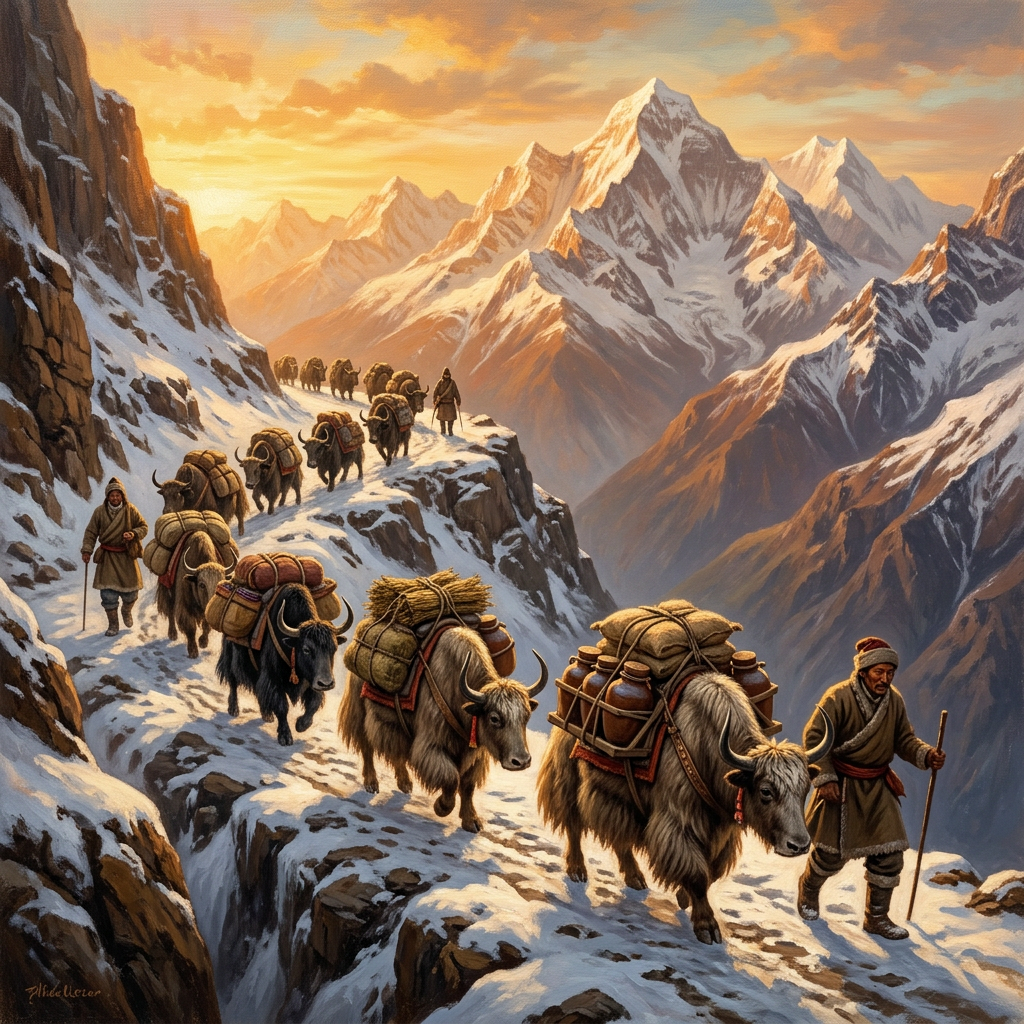
Archaeologists and botanists have successfully identified a previously undocumented high-altitude trade network dubbed the 'Musk and Rhubarb' Route. By analyzing protein residues and microscopic pollen found in 6th-century rock shelters in the Kunlun Mountains, researchers have traced the movement of high-value medicinal goods from the Tibetan Plateau to the urban centers of the Byzantine Empire. This route appears to have functioned as a specialized northern branch of the Silk Road, focusing on biological luxuries rather than textiles.
The study highlights how ancient merchants adapted to extreme environments to transport rhubarb—prized for its purgative properties—and Himalayan musk, which was essential for both medicine and perfumery in Constantinople. The discovery of high-altitude caravanserai sites suggests that this route was a permanent fixture of early medieval global trade, challenging the idea that such rugged terrain was only used for local migration.