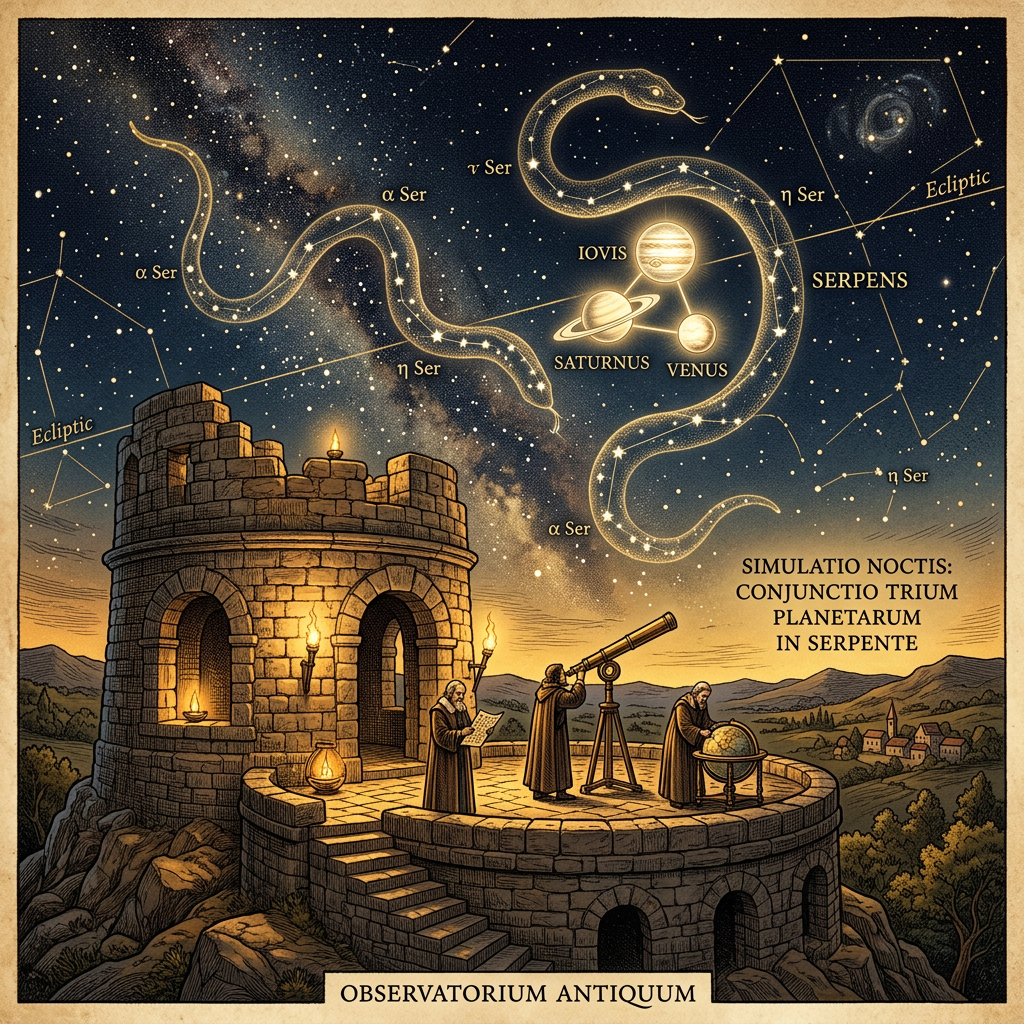
A computational study published in Archaeological Research in Asia has successfully correlated specific astronomical references in early Vedic layers with a rare triple planetary conjunction involving Jupiter, Saturn, and Mars. By utilizing high-precision orbital simulations, researchers identified that this event occurred in 2850 BCE within the Ashlesha nakshatra. The study suggests that the precision of these observations indicates a highly developed tradition of observational astronomy in the Saraswati-Drishadvati river systems.
The research highlights how these celestial events were used as chronological markers for ritual calendars, suggesting that the authors of these texts possessed a systematic method for tracking the retrograde motion of planets. This correlation provides significant evidence for the antiquity of Vedic astronomical knowledge and its integration into the socio-cultural life of early Indian civilizations. The findings further bridge the gap between textual descriptions and physical astronomical phenomena during the Bronze Age.