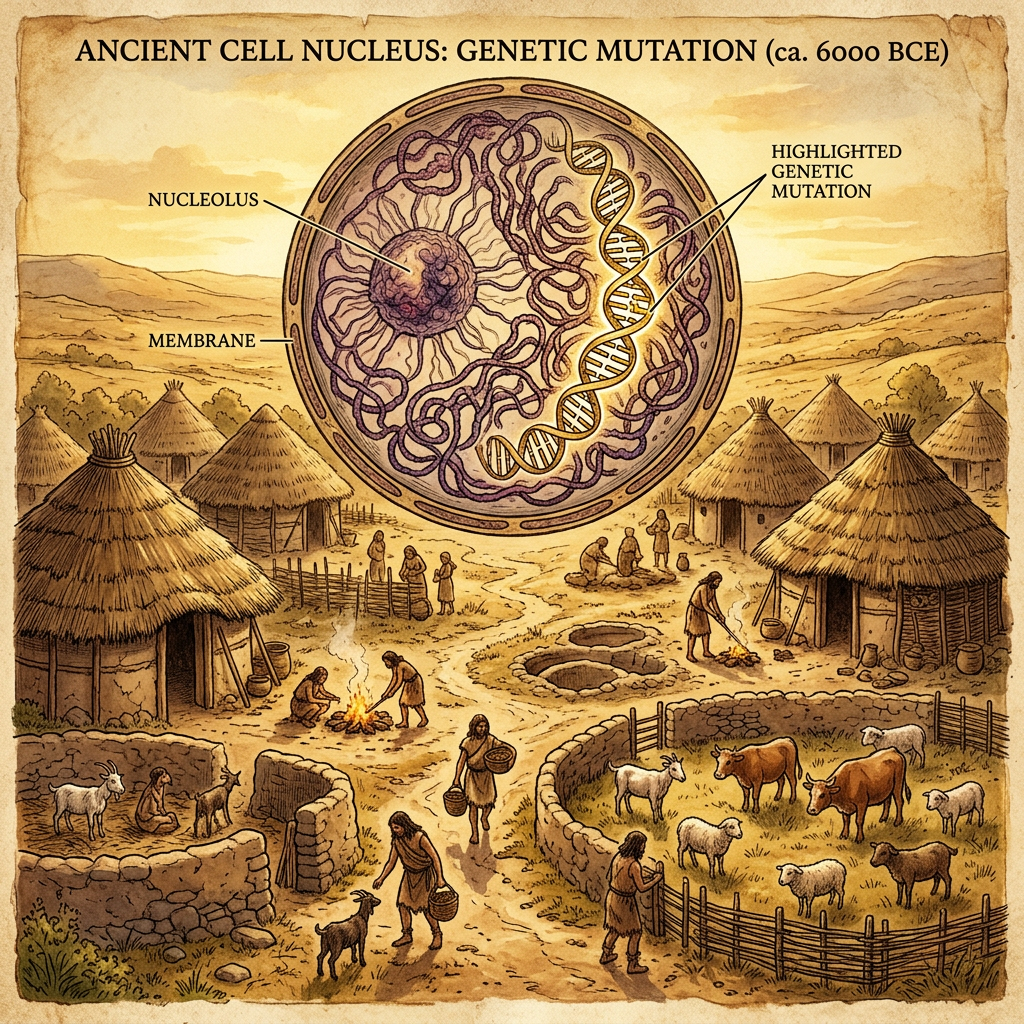
A pioneering study in The Lancet Microbe: Palaeopathology has identified the earliest known genetic signatures of resistance to zoonotic diseases in 9,000-year-old remains from Mehrgarh in present-day Pakistan. As these early settlers transitioned from hunting to animal husbandry, they were exposed to new pathogens from domesticated cattle and goats. The research identifies a specific mutation in the immune system's TLR (Toll-Like Receptor) genes that provided increased protection against bacterial infections common in livestock.
This genomic transition provides a direct biological record of the challenges faced by the world's first pastoralists. The study illustrates how human biology rapidly evolved in response to the Neolithic revolution, marking the beginning of a long-standing arms race between human immunity and livestock-borne illnesses. The Mehrgarh remains offer a unique window into the genetic cost and resilience associated with the birth of civilization and the dawn of intensive farming in the Indus corridor.