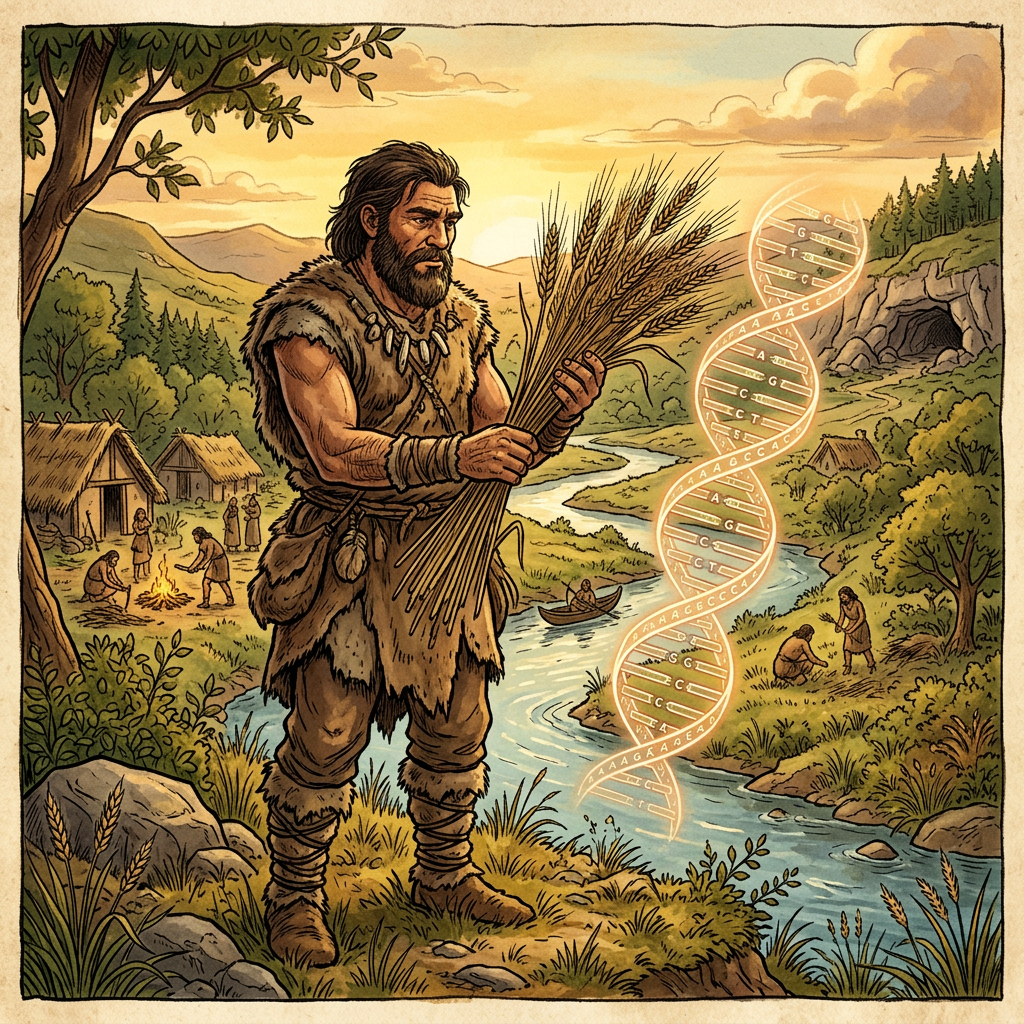
Research published in Genomics of Antiquity has revealed that Neolithic inhabitants of the Belan Valley in Uttar Pradesh possessed unique genetic markers for the digestion of early wheat varieties as far back as 4000 BCE. While rice domestication in the region is well-documented, this study provides the first evidence that local populations were also genetically adapting to wheat-based proteins independently of the Near Eastern Neolithic expansion. The analysis of dental calculus and bone marrow DNA shows a distinct evolutionary path for enzyme production related to gluten breakdown.
The findings suggest that the Gangetic Plain was a melting pot of agricultural experimentation, where diverse cereal crops were domesticated and consumed simultaneously. This genetic adaptation indicates a long-term commitment to sedentary farming and a diverse diet that included both winter and summer crops. The study challenges the 'single-origin' theory of cereal adaptation and reinforces the idea of multiple, independent centers of agricultural innovation in ancient India.