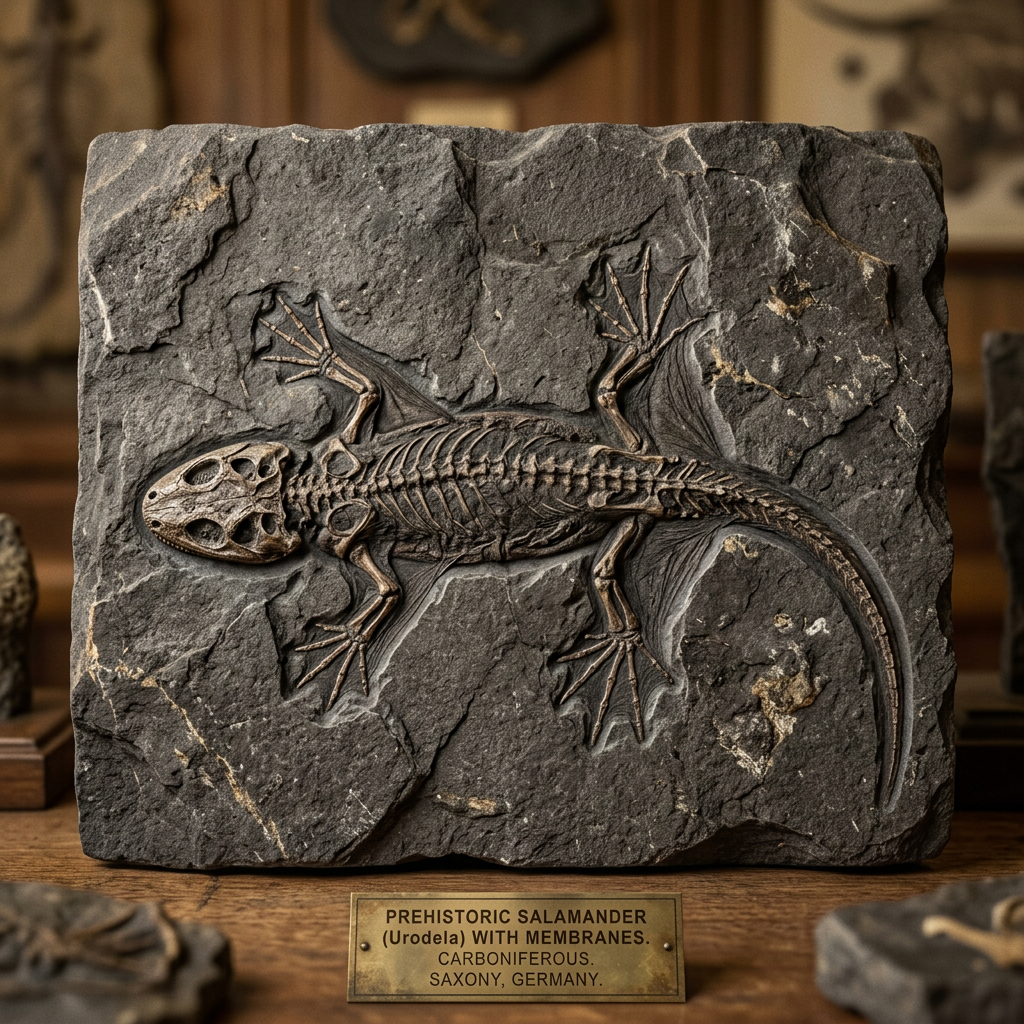
Palaeontologists have announced the discovery of an extraordinary fossil in China’s Inner Mongolia region: a 155-million-year-old gliding salamander. Named Palaeobatrachus pterois, the specimen is uniquely preserved in fine volcanic ash, which allowed for the rare fossilization of soft tissue, including wing-like skin membranes stretching between its elongated limbs.
The discovery provides the first concrete evidence that early amphibians developed gliding capabilities to escape Jurassic predators or hunt insects in the forest canopy. Detailed CT scans of the skeletal structure reveal reinforced rib cages and specialized wrist bones designed to support the aerodynamic stress of short-distance flight. This find pushes back the evolutionary history of aerial locomotion in vertebrates, showing that amphibians were experimenting with the skies far earlier than previously recorded.