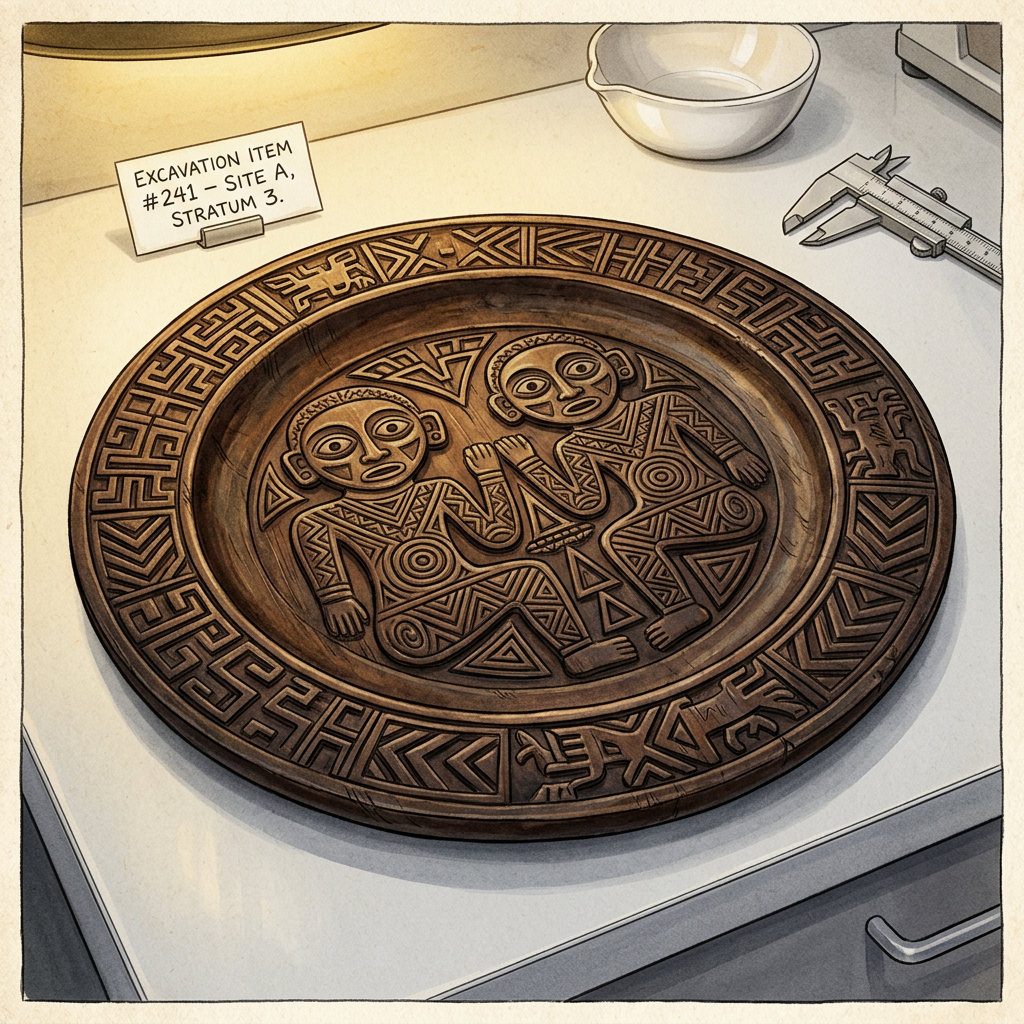
A team of researchers in the Cotuí region of the Dominican Republic has unearthed a rare set of carved wooden cojoba platters used during ritual gatherings of the ancient Taíno people. These platters, preserved in a low-oxygen swamp environment, date to approximately 800 CE and were used to hold hallucinogenic snuff during the Cohoba ceremony, a central festival used to consult ancestors before the harvest season.
The discovery is significant because it provides context for the communal nature of Taíno religious life. The platters are intricately carved with zemi (deity) figures and celestial symbols, suggesting they were used during specific lunar festivals to ensure the successful growth of cassava and other staples. This find highlights the enduring cultural heritage of the Caribbean's indigenous populations and their complex ceremonial traditions.