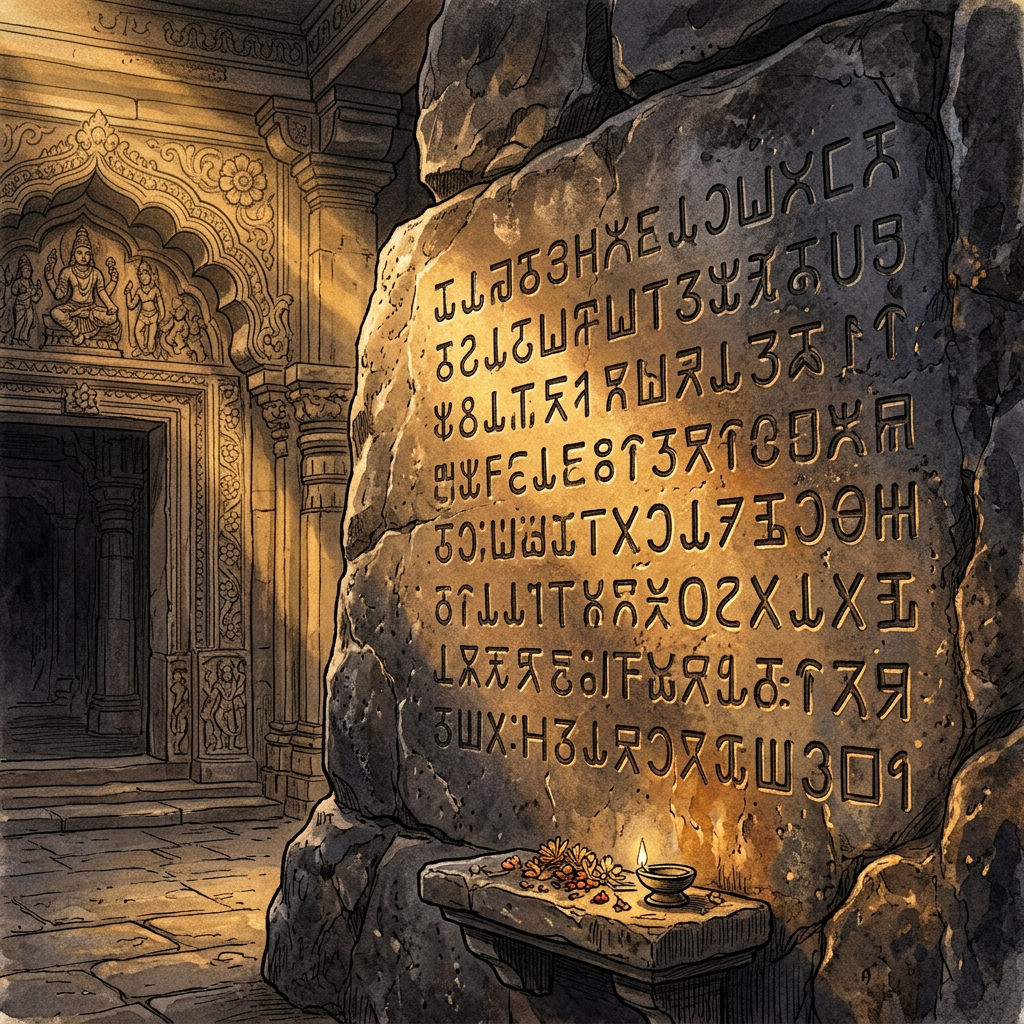
Newly deciphered inscriptions on the basalt walls of a rock-cut shrine in the northern Deccan Plateau have revealed a lost philosophical work known as the 'Ananda-Gita'. Unlike traditional Gitas, this text focuses almost exclusively on the ontology of Ananda (bliss) as the fundamental substrate of the universe, rather than as a state to be achieved through ritual.
Linguistic analysis places the inscriptions in the late Vakataka period, showing a sophisticated synthesis of Upanishadic thought and early aesthetic theory. The text posits that ethical conduct is not a duty but a natural 'overflow' of recognizing the inherent joy in all sentient life. Researchers state this is the earliest known systematic treatise dedicated solely to the metaphysics of happiness in the Indian tradition.