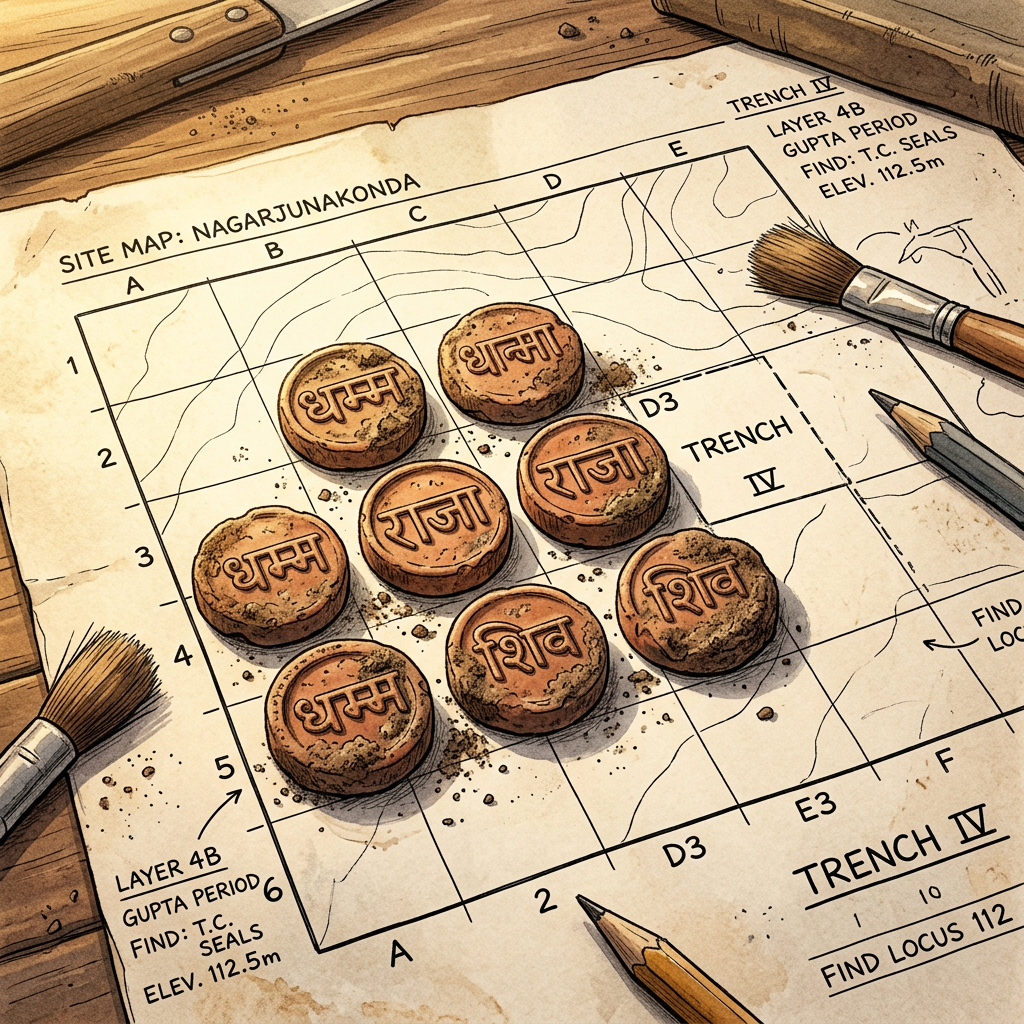
Recent excavations at the ancient city of Shravasti have led to the discovery of several terracotta seals inscribed with the term 'Dharma-Dhvaj' (The Standard of Virtue). Dating to the 4th century BCE, these seals are believed to have been used by a local council of elders to certify that commercial and social transactions met a specific 'ethical code' derived from early Vedic social philosophy.
The brief but potent inscriptions on the reverse of the seals outline four pillars of public virtue: Satya (Truth), Daya (Compassion), Shaucha (Purity), and Dana (Charity). This discovery provides physical evidence of how philosophical concepts from the Upanishads were being operationalized into civic ethics during the transition from the late Vedic period to the Mauryan era.