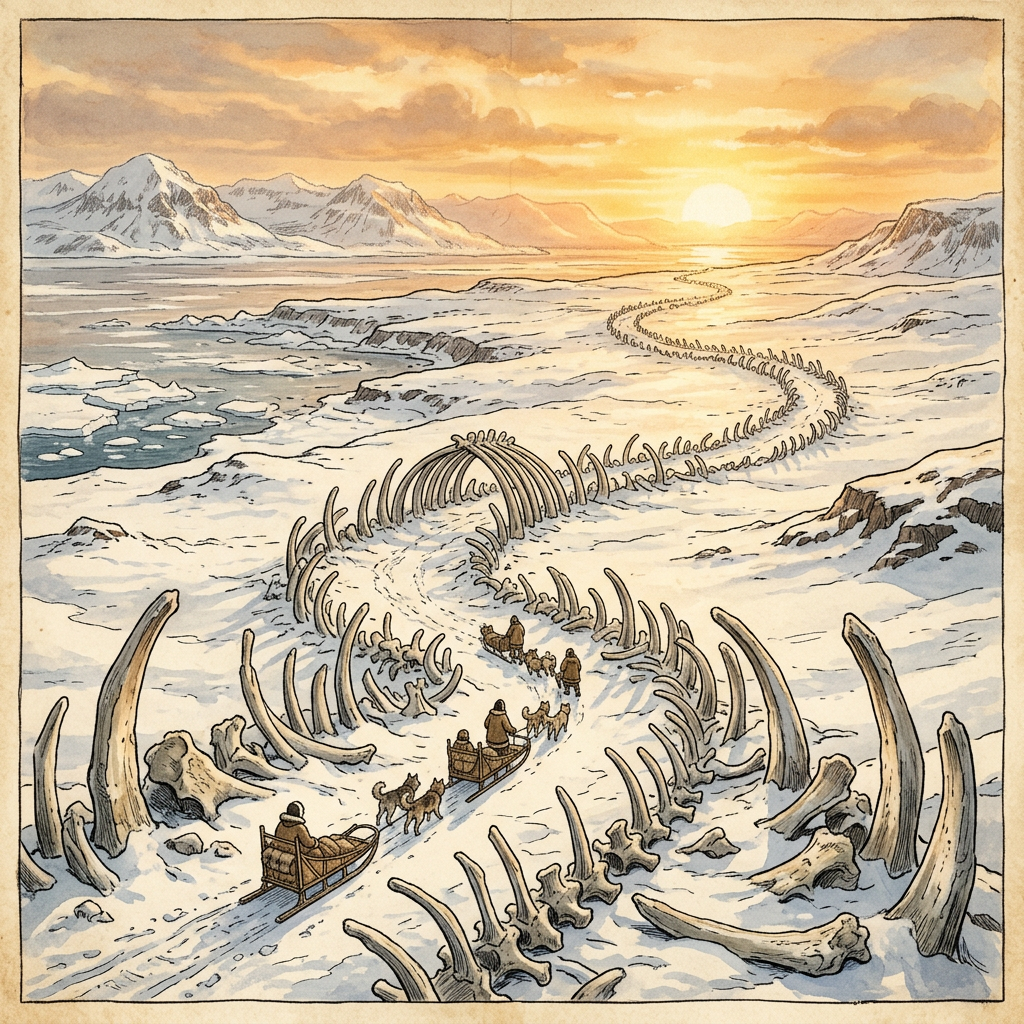
A joint team of Canadian and Inuit archaeologists has identified a sprawling 1.5-kilometer processional route constructed entirely of bowhead whale vertebrae and ribs in the Nunavik region. The site, dating back to approximately 1100 CE, is aligned with the winter solstice sunrise, marking a significant site for ancient Inuit celestial celebrations.
The structural arrangement of the bones suggests they served as markers for a 'spirit path' used during seasonal migrations and ritual dances. This finding provides the first physical evidence of organized, large-scale ceremonial circuits in the Eastern Arctic, linking modern Quviasukvik traditions to a millennium-old heritage of light-welcoming rites.