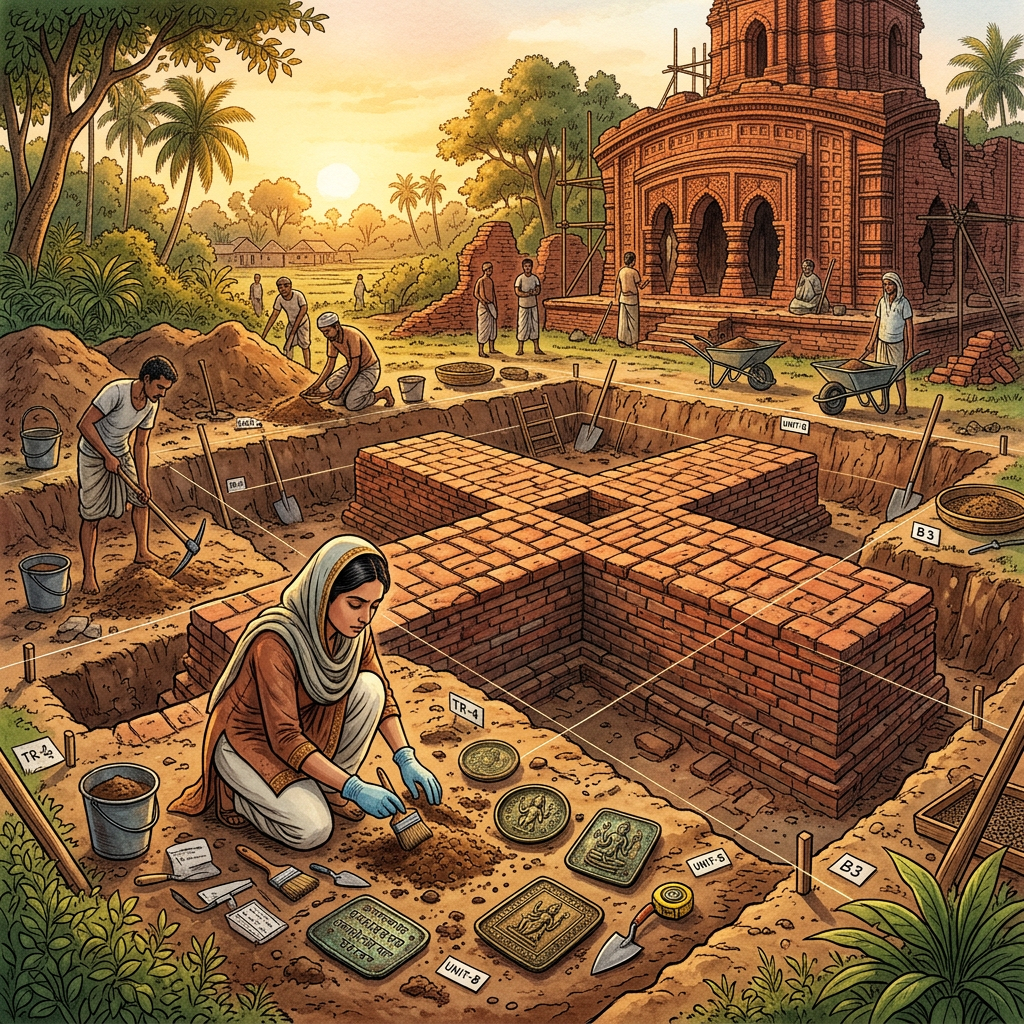
Excavations led by the Jahangirnagar University archaeology department have revealed a large 9th-century monastic temple complex in the Dinajpur district of Bangladesh. The site, constructed primarily of kiln-burnt bricks, consists of a central cruciform temple surrounded by a series of monastic cells. This layout mirrors the world-famous Somapura Mahavihara, but on a more intimate scale, suggesting it was a regional center for Vajrayana Buddhism under the patronage of the Pala Empire.
The most sensational find at the site is a cache of three intact copper-plate inscriptions recovered from a hidden floor vault. These plates are expected to provide crucial genealogical data on late Pala rulers and clarify the administrative boundaries of ancient Pundravardhana. Additionally, several terracotta plaques depicting Jataka tales were found in situ, offering a glimpse into the narrative art styles that influenced architecture across Southeast Asia.