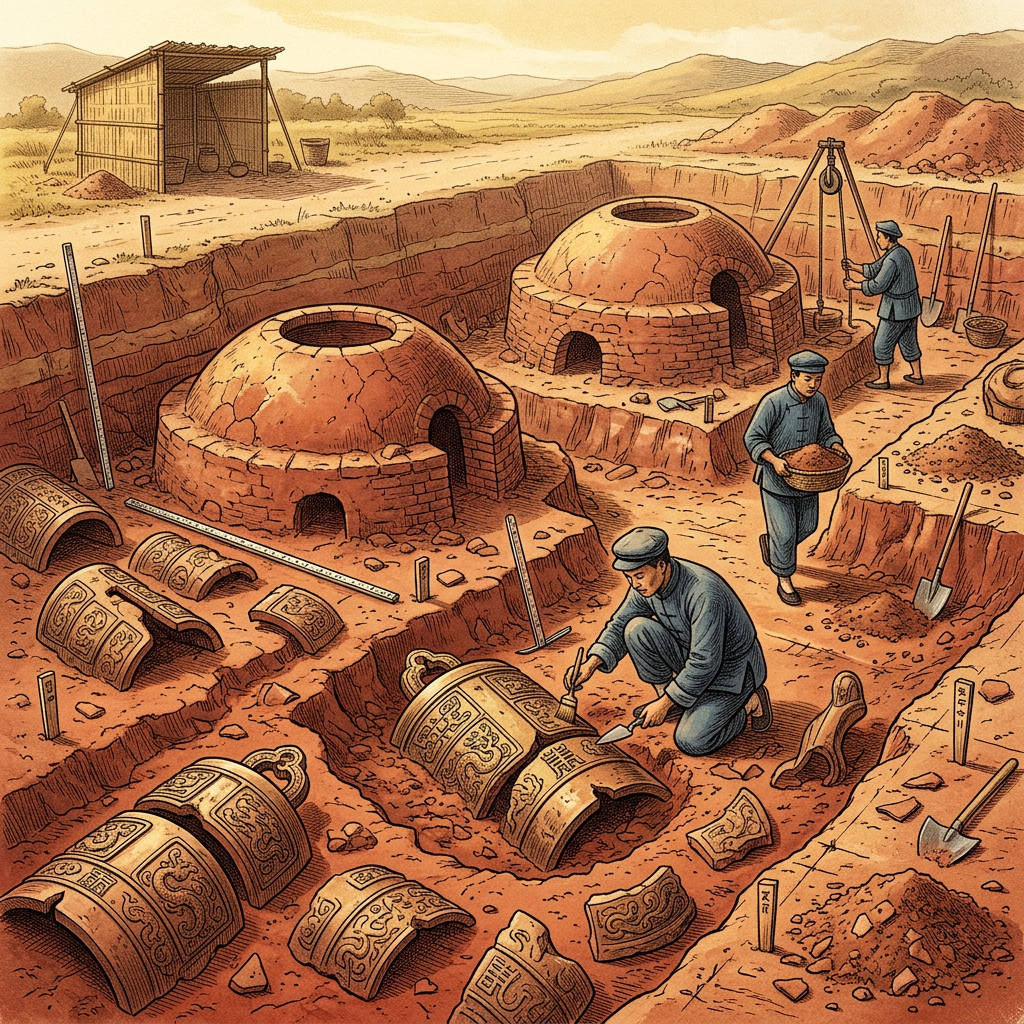
Archaeologists in China's Hubei Province have excavated a massive Warring States Period foundry specifically designed for the production of ceremonial bronze bells (bianzhong). The site includes twenty-four specialized kilns and hundreds of intact ceramic molds featuring the complex interlocking patterns required for the acoustic tuning of the bells. This discovery confirms that the region was a primary industrial hub for the production of elite musical sets used in royal courts across ancient China.
Chemical analysis of the slag found at the site reveals a highly precise copper-tin-lead ratio, which was essential for creating the dual-tone resonance characteristic of these instruments. Researchers also found stone carving tools and templates used to decorate the bells with dragon and phoenix motifs. This industrial complex provides a rare glimpse into the intersection of high-level metallurgy and musical theory during one of the most transformative periods of Chinese history.