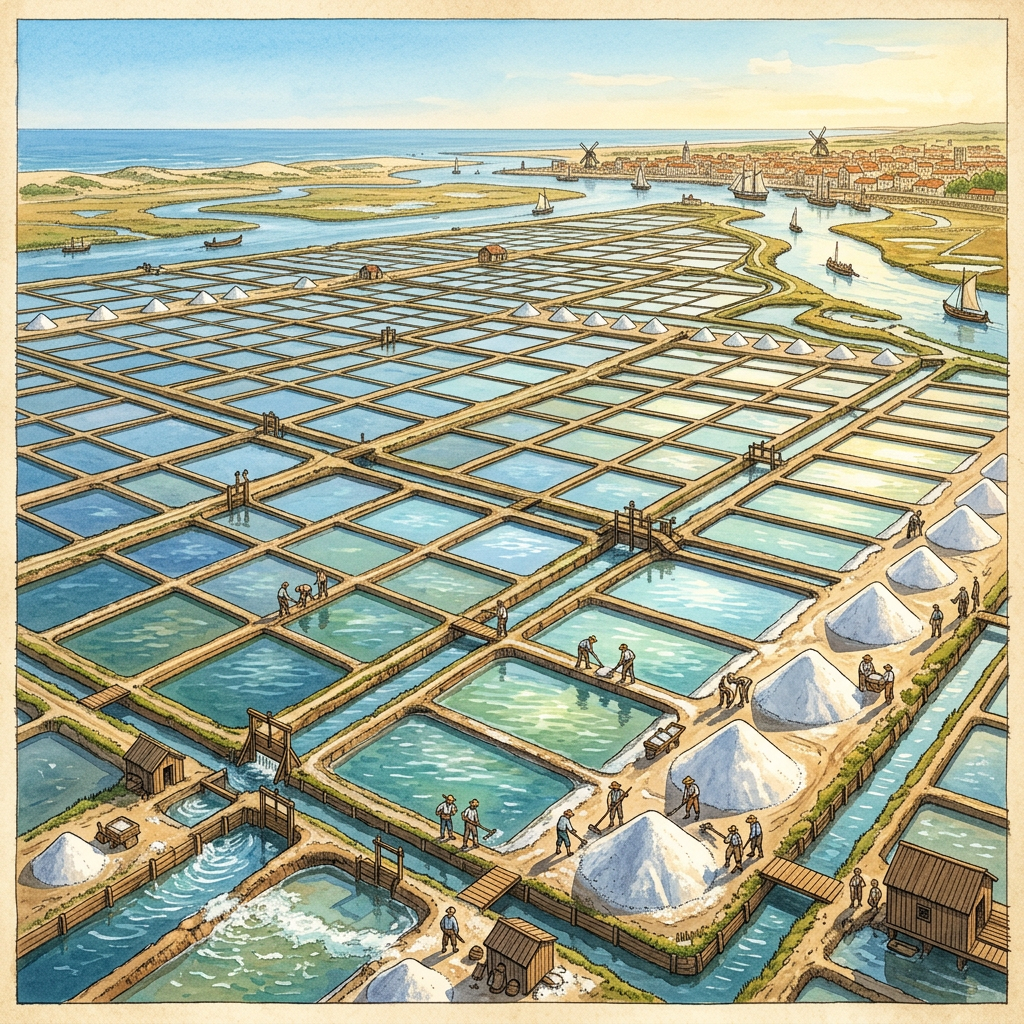
UNESCO has officially added the Ancient Salt-Crystallization Ponds of the Tagus Estuary in Portugal to the World Heritage List. These sites, which have been in continuous operation since the Phoenician era, represent a unique bio-cultural landscape where human engineering has harmonized with the natural tidal cycles of the Atlantic for over two millennia. The designation recognizes not only the physical infrastructure of the salt pans but also the traditional ecological knowledge passed down through generations of salt-workers, or salineiros.
The estuary's traditional salt production methods are increasingly seen as a model for sustainable coastal management in the face of rising sea levels. The UNESCO committee highlighted the site's role in maintaining local biodiversity, as the shallow evaporation ponds serve as critical habitats for migratory birds. The new status will provide international funding to preserve the timber sluice gates and earthen embankments that are vulnerable to extreme weather events linked to climate change.