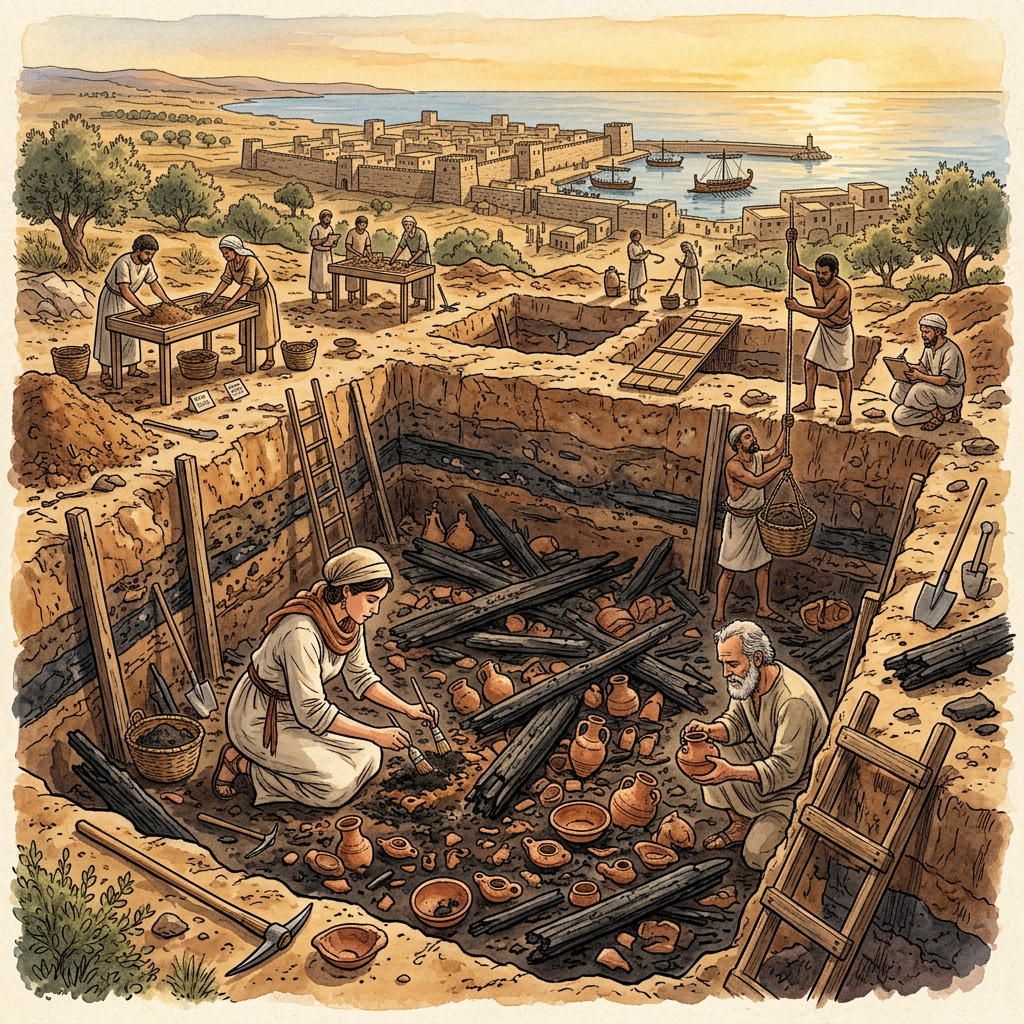
A team of researchers at the ancient port city of Byblos has discovered a series of 'Scented-Cedar' offering pits dating to the late Hellenistic period. These pits were filled with layers of charred cedar wood, aromatic resins, and miniature terracotta figurines depicting mountain deities. The strategic placement of these offerings along the city's ceremonial gateway suggests they were part of a localized Phoenician 'Festival of the Cedars', a previously poorly understood rite dedicated to the protection of maritime trade routes.
The excavation revealed that these rituals involved the controlled burning of large quantities of imported oils and local cedar, creating a sensory experience designed to invoke divine favor. By analyzing the stratigraphic layers, archaeologists have determined that the festival occurred annually for at least three centuries, highlighting the enduring nature of Phoenician cultural heritage and the integration of environmental symbols into their complex religious calendar.