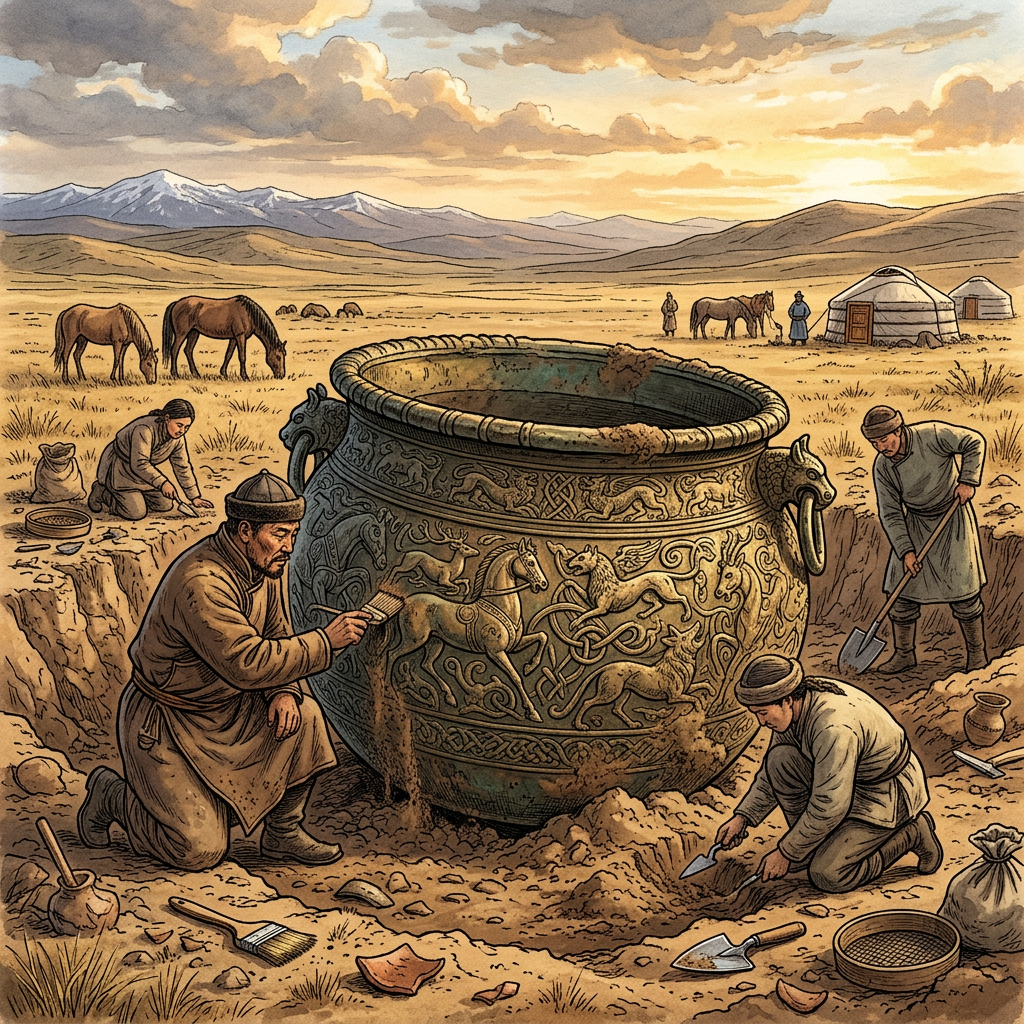
In the Minusinsk Hollow of Siberia, archaeologists have identified a series of copper-lined feasting pits dating back to the late 2nd millennium BCE. These pits, containing enormous quantities of cattle and horse bones along with ritual ceramics, indicate the presence of large-scale communal gatherings. Chemical analysis of the vessels confirmed the presence of fermented dairy lipids, suggesting that the consumption of ritual milk—a precursor to modern steppe traditions—was a central component of these events.
Scholars argue that these findings provide the first archaeological evidence for the 'Midsummer Milk' festival, a traditional rite practiced by early Tagar culture populations. This festival appears to have functioned as both a social equalizer and a spiritual appeal for the continued fertility of the herds during the peak of the summer season, establishing a cultural tradition that persisted for centuries across the Eurasian steppe and influenced later nomadic civilizations.