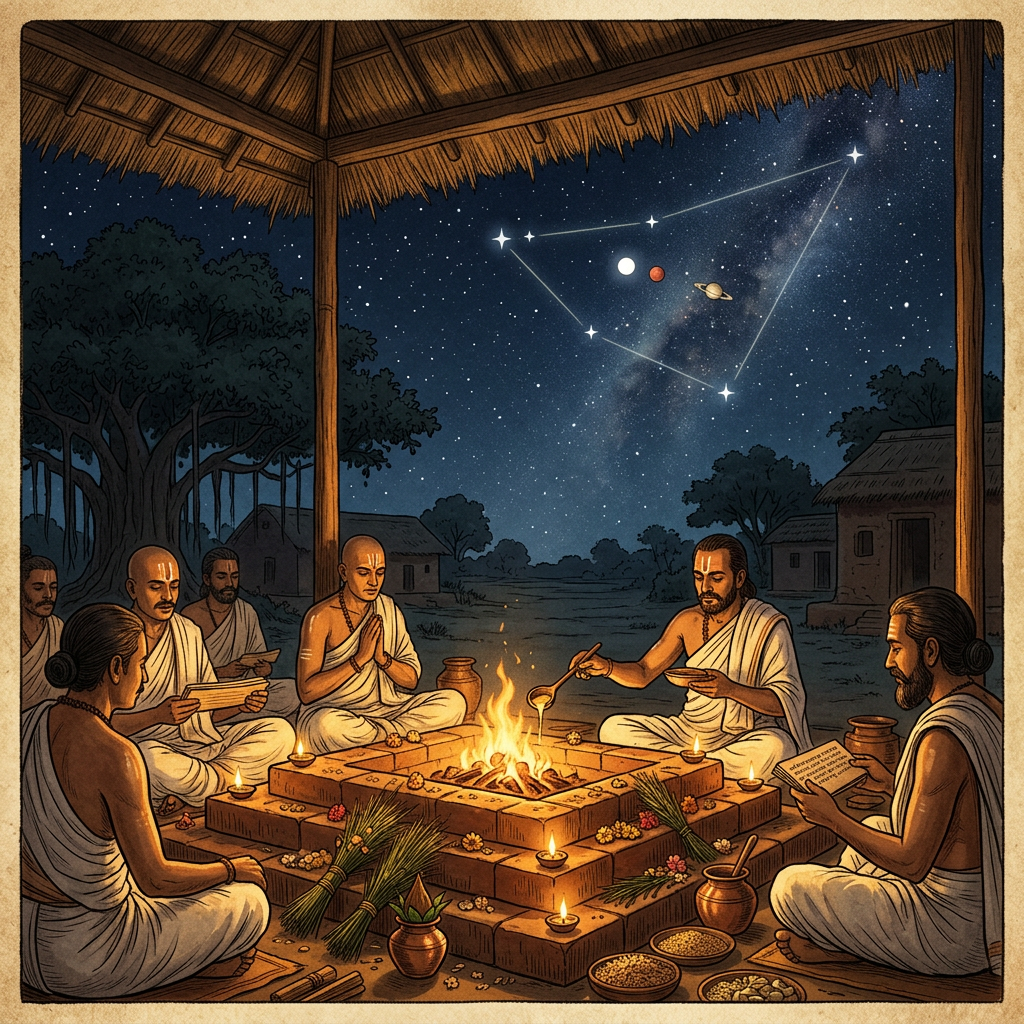
A breakthrough study published in Nature Archaeology has utilized advanced celestial simulations to correlate specific ritual descriptions found in the Atharvaveda with a rare astronomical event occurring in the 3rd millennium BCE. Researchers identified that the text's detailed sequences of offerings were timed to coincide with a triple planetary conjunction of Jupiter, Mars, and Saturn within the Shravana nakshatra, providing a concrete chronological anchor for the composition of these layers.
The research team employed high-precision orbital models to account for precessional drift and atmospheric refraction, demonstrating that the authors of the Atharvaveda possessed a sophisticated system for monitoring long-term planetary cycles. This discovery suggests that the ritual calendar was far more mathematically rigorous than previously understood, serving as a functional tool for synchronization with the cosmos during the early Vedic period.