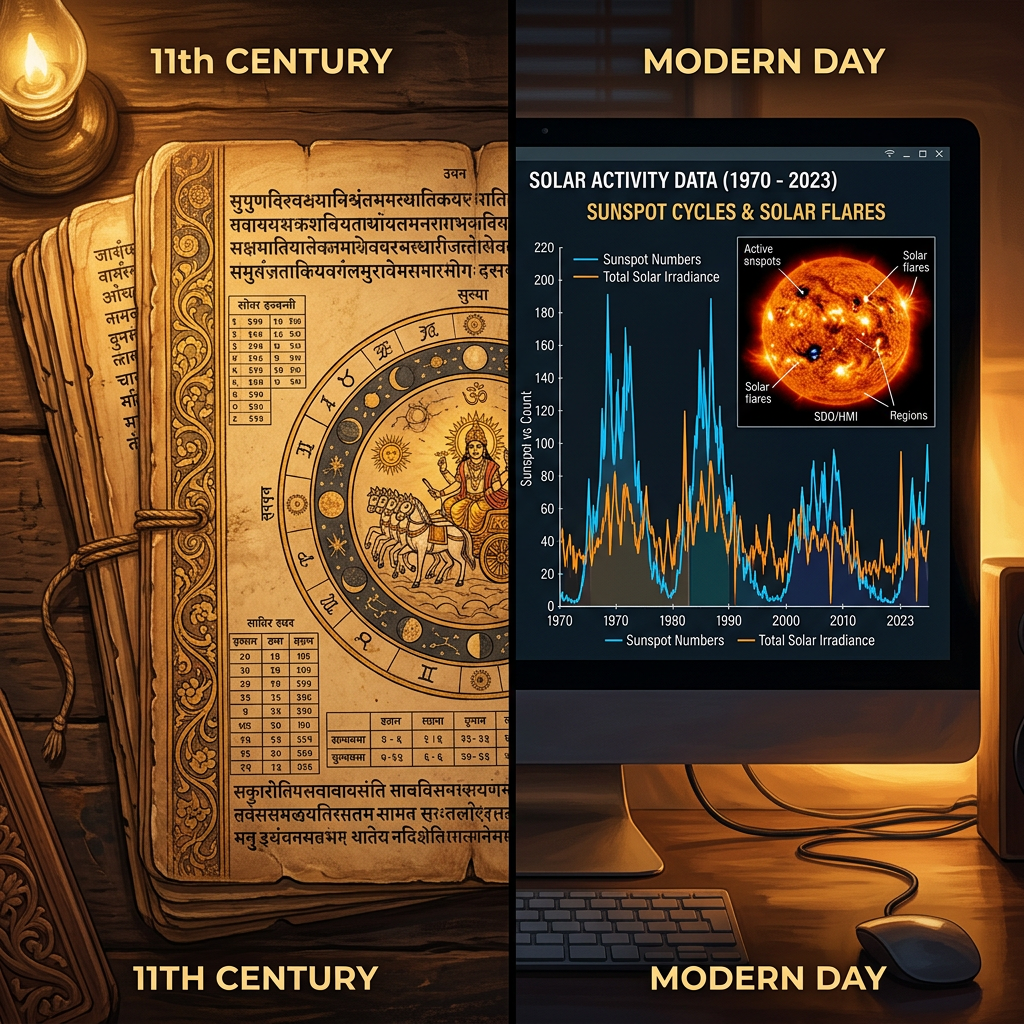
New research published in Astronomy & Computing has identified a set of complex recursive algorithms within 11th-century Siddhanta Sara manuscripts. These algorithms were designed to model long-term variances in solar activity, specifically the non-linear progression of solar flare cycles. The study suggests that medieval Indian astronomers were using advanced iterative methods to calculate the periodicity of solar spots and associated magnetic disturbances.
By translating the Sanskrit verses into modern computational logic, researchers demonstrated that the Siddhanta Sara model achieves a high degree of correlation with reconstructed historical solar data. This indicates a level of mathematical abstraction in medieval India that anticipated modern numerical analysis, specifically in the use of discrete steps to approximate continuous variable phenomena in the solar atmosphere.