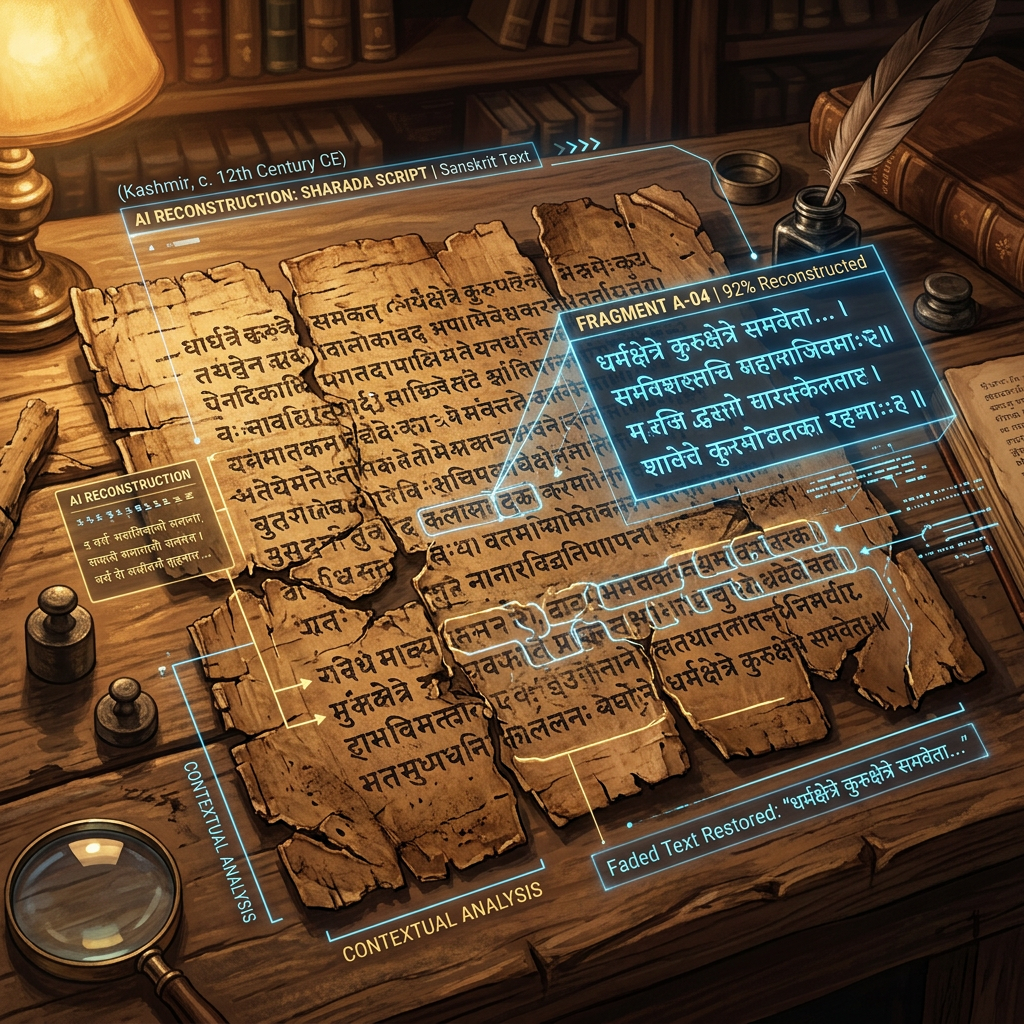
Researchers at the International Institute of Heritage Science have utilized a specialized AI model to decipher a cache of fragmented Sharada script manuscripts discovered in the Gurez Valley. The texts constitute a lost Sanskrit treatise titled Jala-Jiva-Vigyan, which provides a comprehensive and systematic classification of aquatic crustaceans, including crabs, prawns, and freshwater shrimp, predating modern zoological taxonomies by over a millennium.
The manuscript details the morphological characteristics, reproductive cycles, and environmental indicators of over 40 distinct species found in the Himalayan river systems. By applying machine-learning algorithms to reconstruct missing characters and ink-faded ligatures, the team has revealed a sophisticated level of observation and biological categorization that highlights the scientific rigor of early medieval Indian natural history.