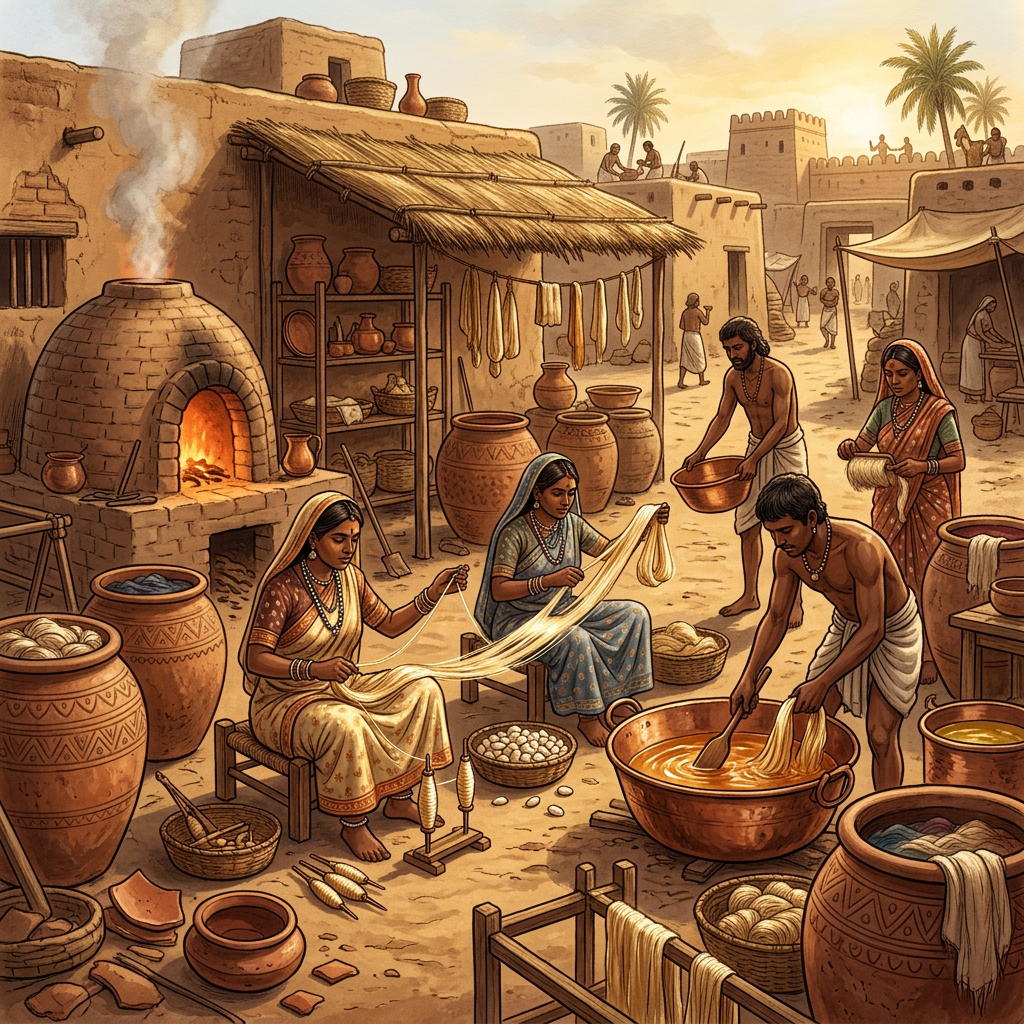
Archaeologists excavating a newly identified site in northern Gujarat have uncovered the first definitive evidence of a large-scale sericulture industry within the Indus Valley Civilization. The discovery includes a series of specialized terracotta vats containing microscopic residues of wild silk filaments, suggesting that the Harappans were harvesting and processing silk from indigenous moth species nearly two millennia before the establishment of the formal Silk Road.
The excavation revealed a dedicated industrial quarter featuring precision spinning tools and bone needles, alongside a collection of copper basins used for degumming silk fibers. Researchers believe this facility served as a major export hub, providing luxury textiles for trade with contemporary Mesopotamian city-states. The presence of standardized stone weights within the workshop further indicates a highly regulated production and taxation system for these high-value goods.