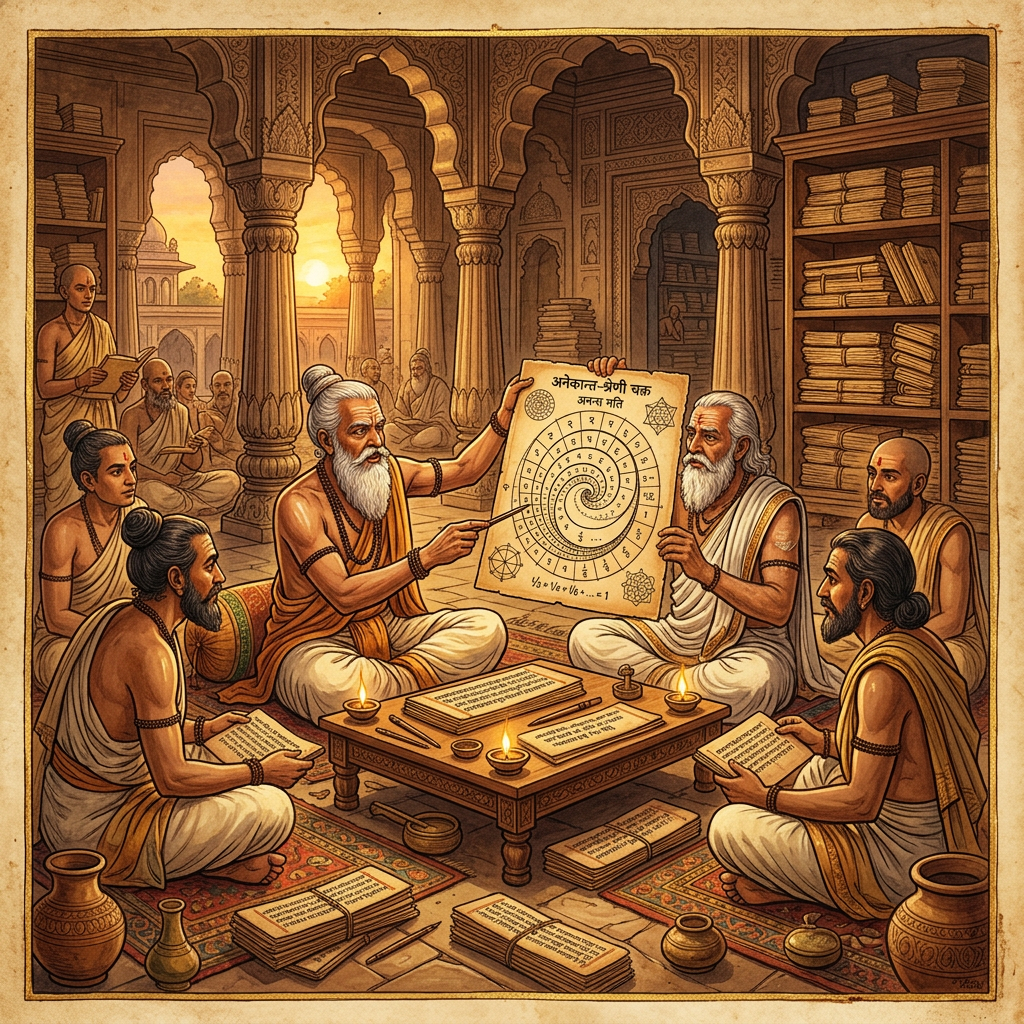
A new analytical study of the Nyaya-Sutra commentaries from the 6th century has identified a formal mathematical treatment of Anavastha (Infinite Regress). Researchers found that these Sanskrit texts contain logical proofs that closely resemble modern set-theoretical concepts of recursive loops. The study shows that ancient Indian logicians used these proofs to invalidate specific arguments regarding the origin of consciousness and the infinite divisibility of matter.
By translating these logical structures into modern symbolic notation, the research proves that ancient Indian epistemology had developed a rigorous framework for identifying and resolving logical paradoxes. This academic publication bridges the gap between ancient philosophy and contemporary computational logic, suggesting that the foundations of formal reasoning were highly developed in India nearly 1,500 years ago.