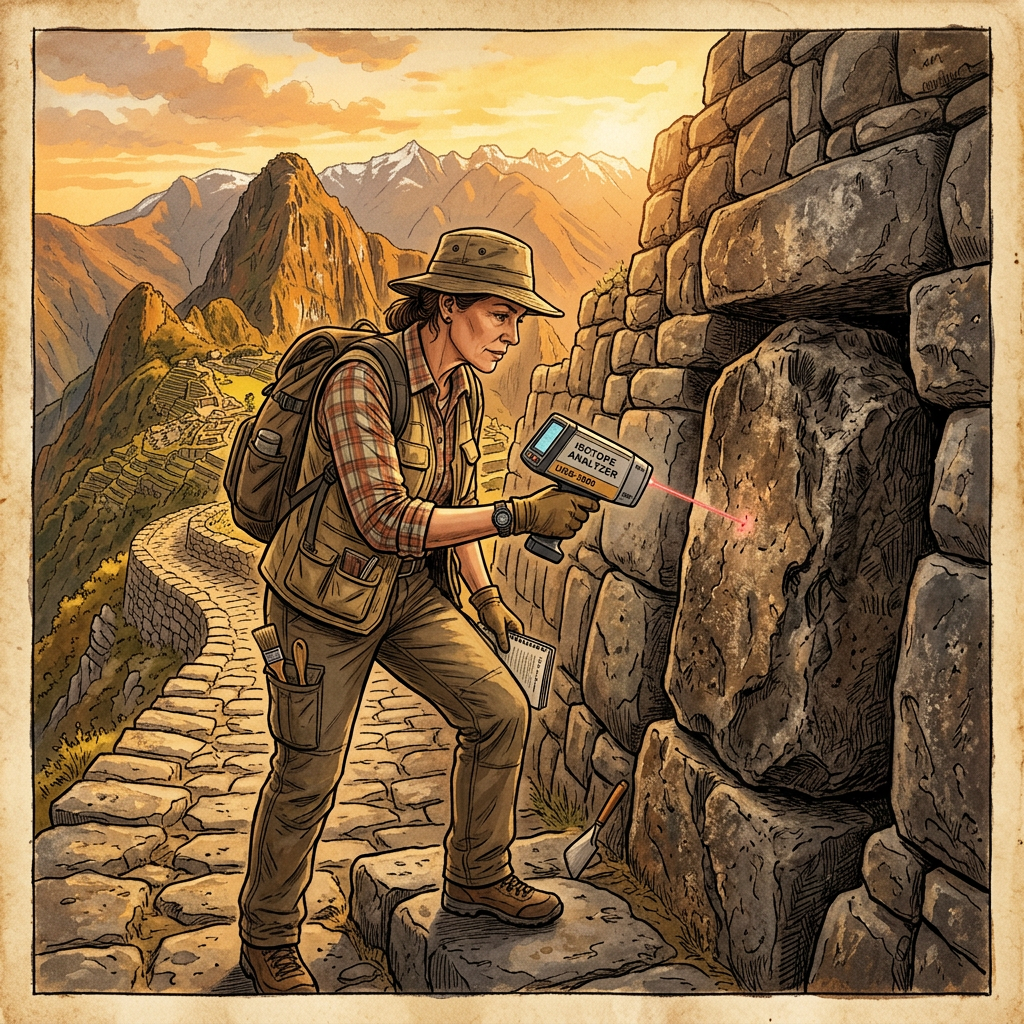
A new archaeological dating methodology utilizing Manganese-54 (Mn-54) cosmogenic isotopes has successfully refined the timeline of the Inca Road (Qhapaq Ñan) through the Atacama Desert. Unlike traditional carbon-14 dating which requires organic material, this technique measures the cosmic ray exposure on the surface of stone pavers. The study, published in PNAS, identifies that the road's expansion into northern Chile occurred exactly between 1472 and 1478 CE.
This level of precision allows historians to correlate Incan infrastructure development with specific regional conquest records. The methodology is being hailed as a major breakthrough for high-altitude archaeology, where organic preservation is often poor, enabling researchers to date stone monuments and paved networks with unprecedented accuracy across the Andean region.