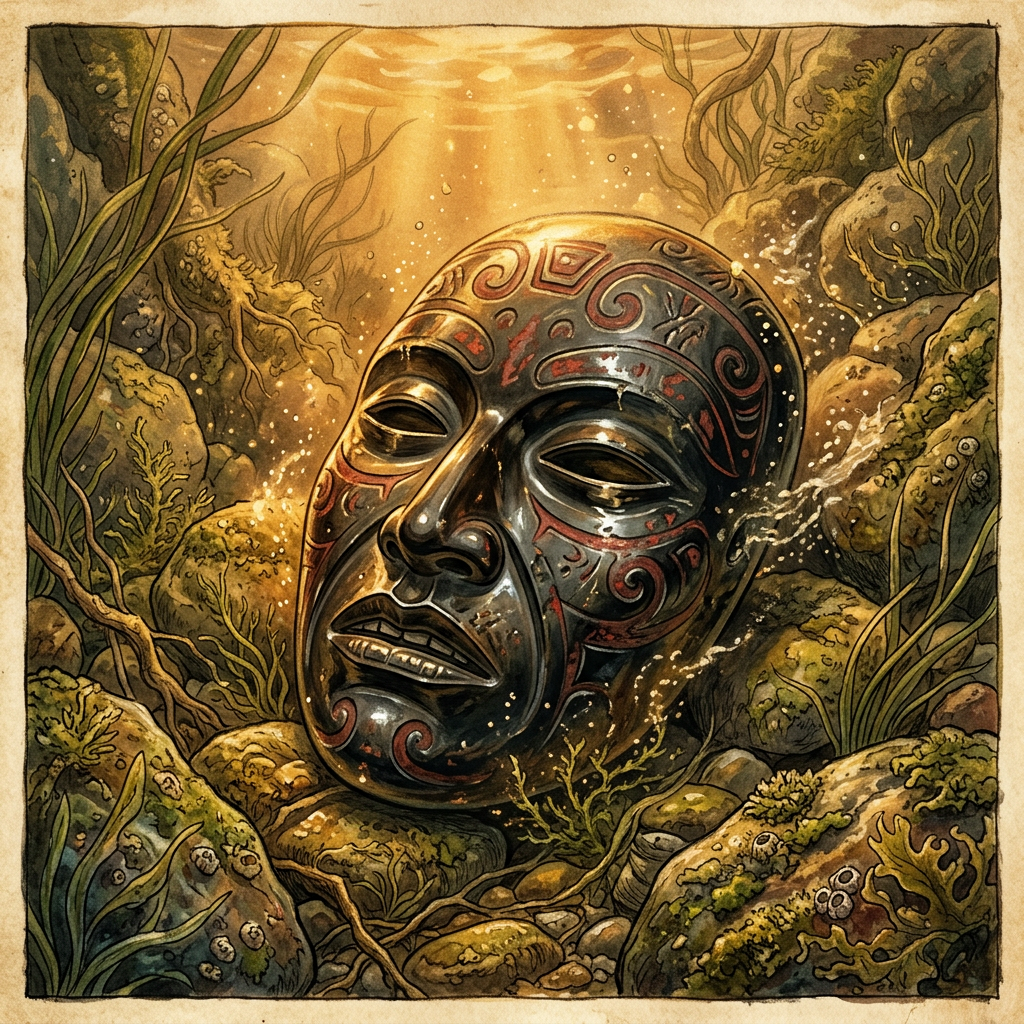
Marine archaeologists exploring the submerged ruins of a Maya-era settlement in Lake Güija have discovered a cache of obsidian masks meticulously coated in cinnabar. The artifacts, dating back to approximately 800 CE, were found arranged in a circular formation on a ceremonial platform, suggesting they were used in a multi-day festival dedicated to a water-dwelling serpent deity. This discovery provides the first physical evidence of the "Festival of the Rippling Water," a rite previously known only through fragmentary glyphs and oral traditions.
The excavation team also recovered several bone whistles and turtle-shell percussion instruments nearby. Researchers believe these items were part of a ritual performance where dancers wearing the reflective masks would mimic the movement of waves. The presence of cinnabar, a rare and prestigious pigment, highlights the high social importance of this seasonal gathering, which likely coincided with the start of the rainy season to ensure a bountiful harvest and safe passage for lake traders.