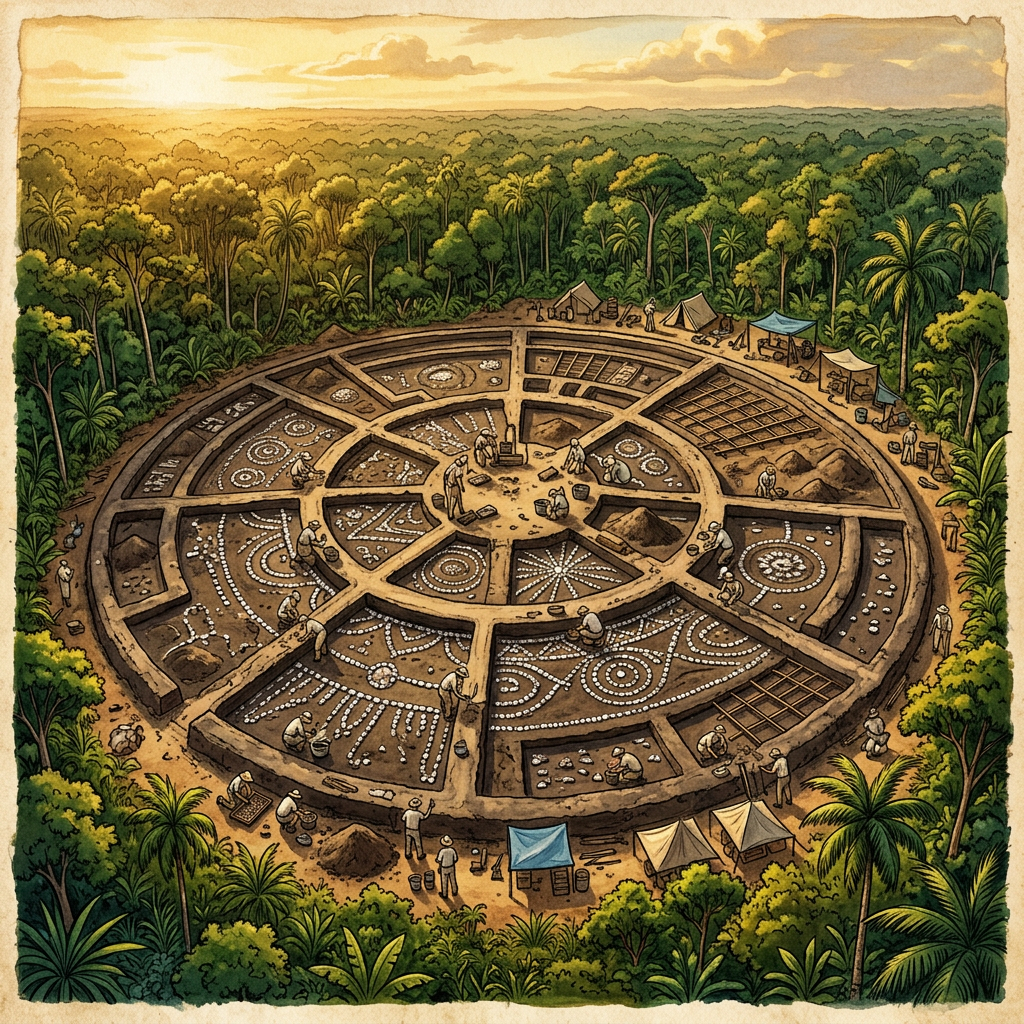
Excavations on the island of Palawan have uncovered a monumental flattened earth platform reinforced with millions of crushed sea shells. Dating back to 1,000 BCE, the site served as a communal dancing ground for early Austronesian settlers. Analysis of the surrounding soil revealed high concentrations of pigments and pollens from flowering trees, suggesting the area was used for an ancient "Festival of the First Bloom" to mark the transition between the monsoon seasons.
Among the finds were numerous conch-shell trumpets and jade earplugs, which indicate the presence of a specialized class of ritual performers. This site is significant as it demonstrates that large-scale, organized cultural festivals were central to social organization in the Philippines long before the arrival of foreign influences. The dancing ground’s proximity to ancient rice-terracing evidence further links these celebrations to agricultural cycles and the worship of ancestral land spirits.