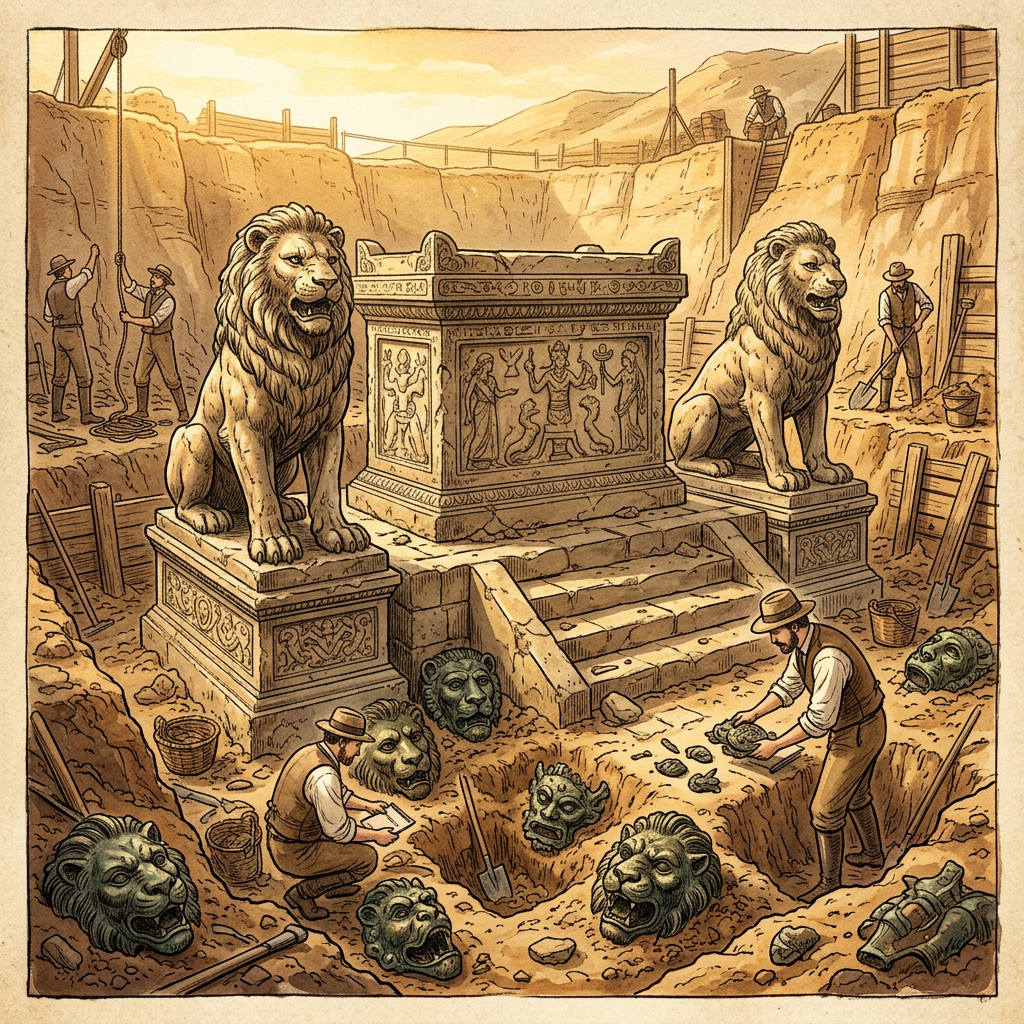
A construction project in the ancient city of Tyre, Lebanon, has led to the accidental discovery of a Phoenician ceremonial complex dedicated to Melqart, the city's protector god. The highlight of the find is a massive stone altar flanked by two life-sized limestone lions and a collection of rare bronze masks. Researchers believe these artifacts were central to the "Egersis of Melqart," a grand annual festival that celebrated the deity's resurrection and the city's military and commercial strength.
The bronze masks, featuring fierce expressions and stylized manes, were likely worn by high priests during ritual combat reenactments. The site also contained several incense burners imported from across the Mediterranean, emphasizing the international scale of Phoenician religious life. This discovery offers a new perspective on how state-sponsored festivals were used to forge a collective identity among the Phoenician city-states through displays of ritualized bravery and artistic spectacle.