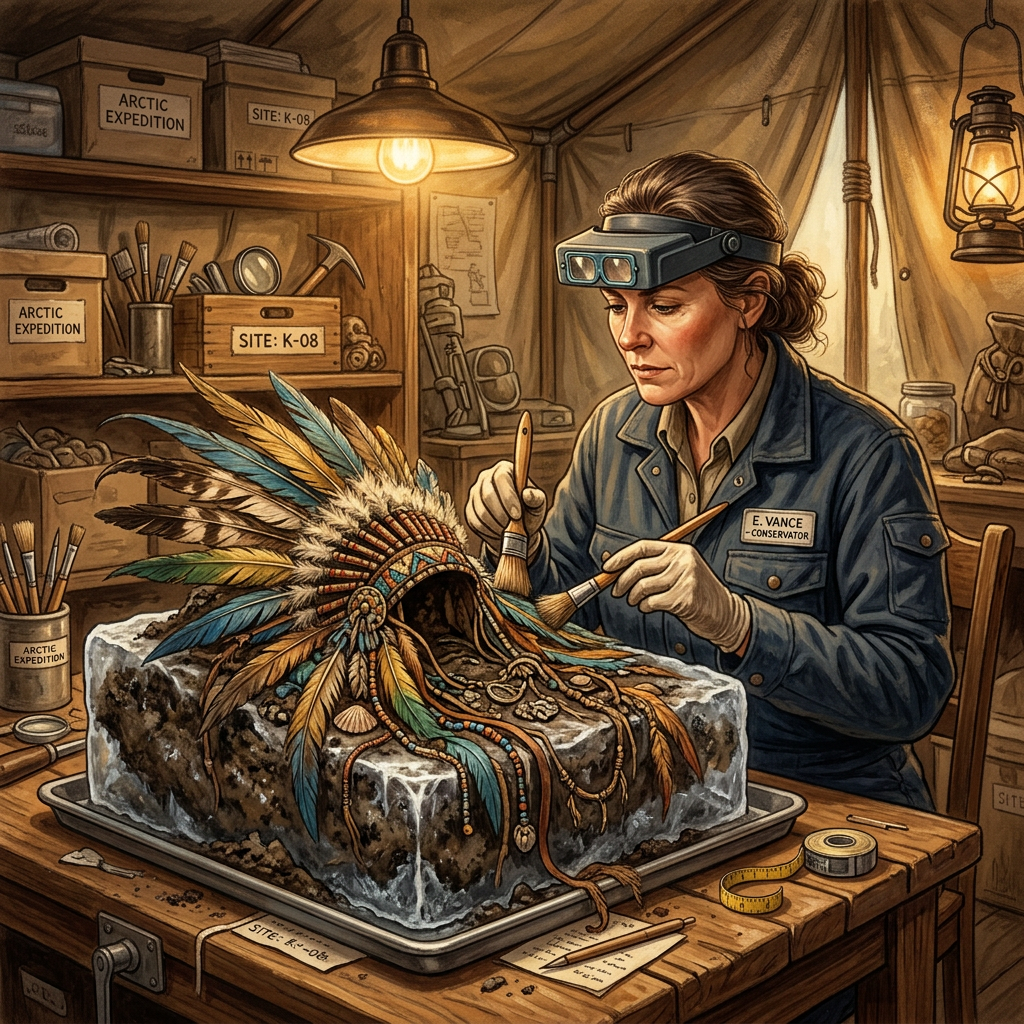
An international team of climate archaeologists working in the Siberian Lena River Basin has discovered a perfectly preserved burial site belonging to an unknown Neolithic culture. Due to the rapid melting of the permafrost, the researchers were able to recover organic materials that rarely survive, including a complex headdress made from the feathers of extinct regional birds and elk-skin garments. The burial, which dates to roughly 4000 BCE, appears to belong to a high-status individual, likely a spiritual leader or shaman, based on the ceremonial drums and quartz crystals found within the grave.
The discovery is being hailed as a 'biological and cultural time capsule' that provides unprecedented insights into the environmental history of the Arctic. Analysis of the feathers and skin will allow scientists to reconstruct the local ecosystem of 6,000 years ago, offering clues into how these early communities adapted to a warming post-glacial world. However, the site was only visible because of the accelerating permafrost melt, highlighting the urgent need for 'emergency archaeology' across the rapidly changing Siberian landscape.