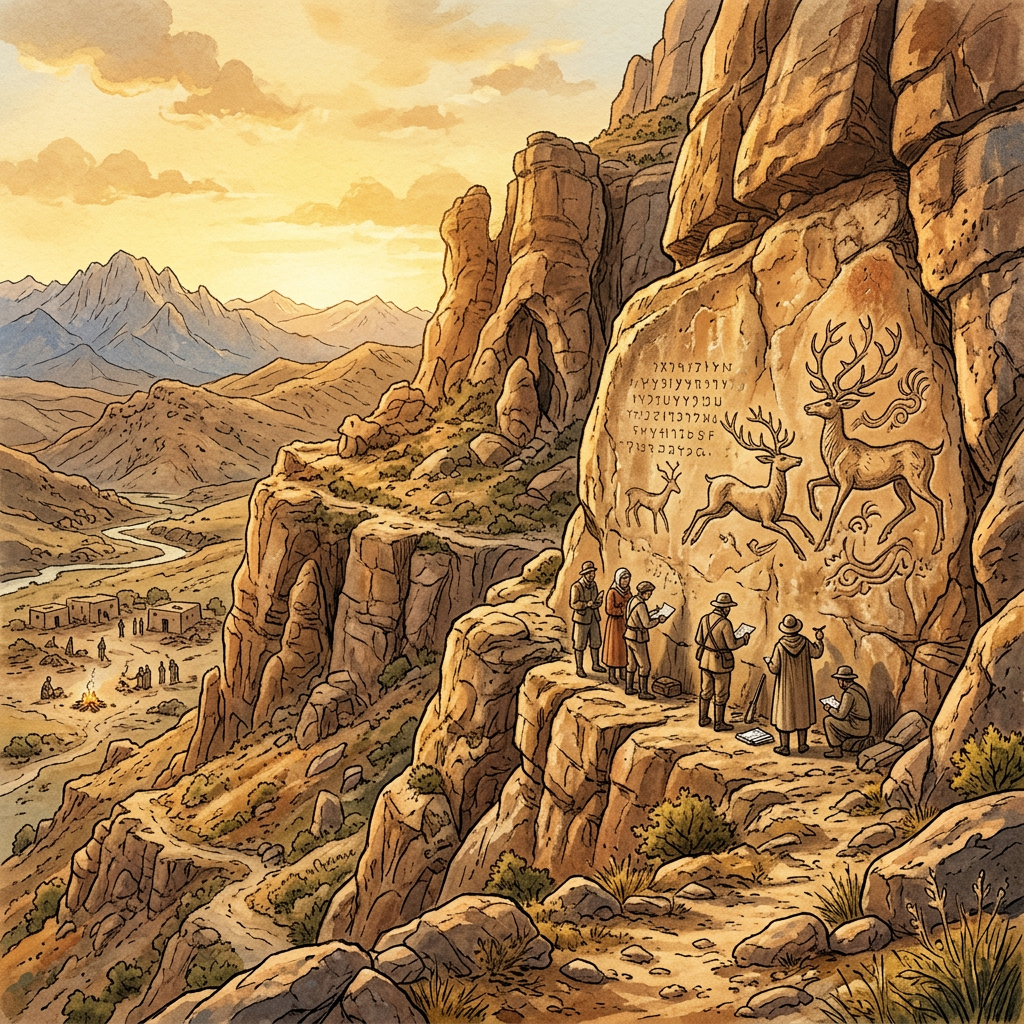
A joint expedition in the Surxondaryo Region of Uzbekistan has discovered rock-cut inscriptions dating back to the 5th century BCE. The inscriptions, written in an early form of Kharosthi, document a philosophical exchange between Indo-Scythian nomadic leaders and traveling Vedic sages. The discourse focuses on the metaphysics of fate (Daiva) versus human effort (Purushakara).
This is the earliest recorded evidence of direct philosophical synthesis between the Central Asian steppe traditions and Vedic thought. Lead researcher Dr. Elena Kostic notes that the text explores the concept of 'the cosmic rider,' a metaphor used to describe the soul’s journey through the physical world, blending Scythian animal symbolism with Upanishadic monism.