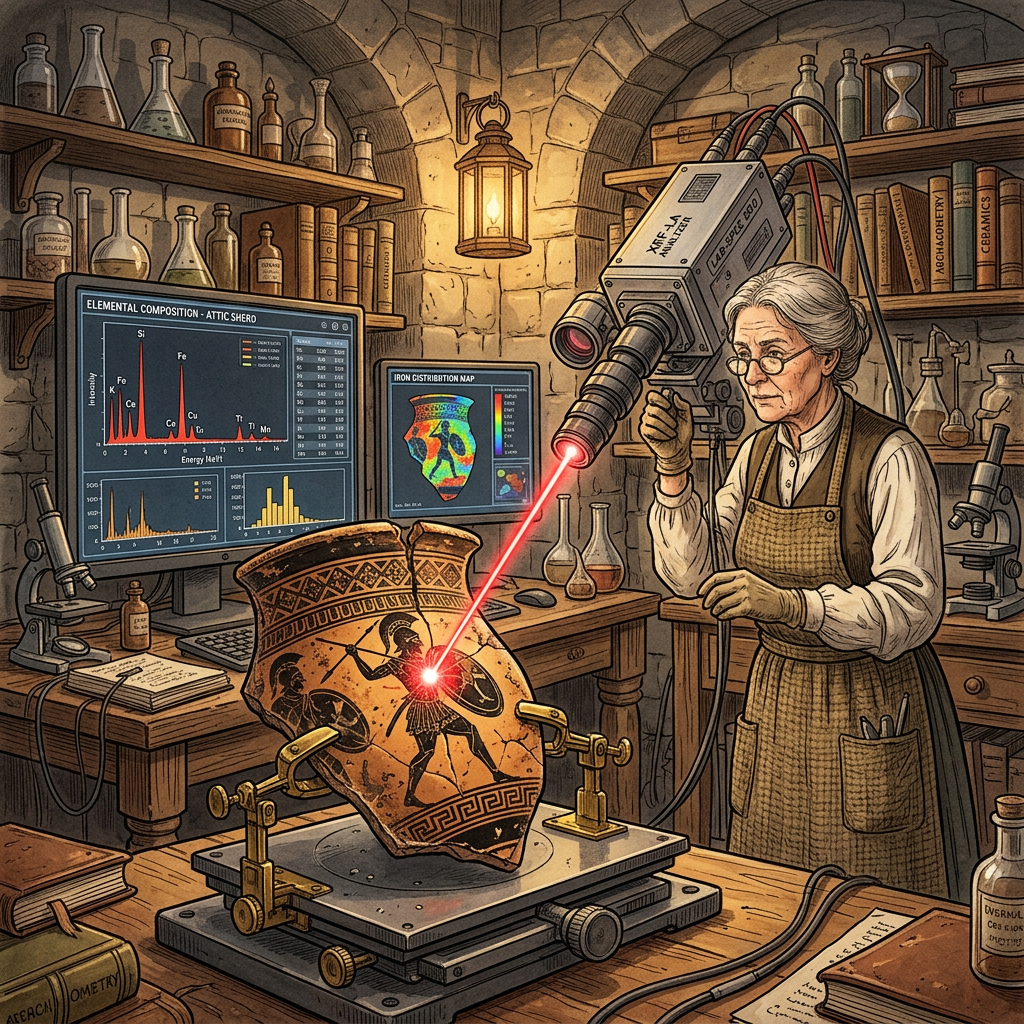
A groundbreaking study published in the Journal of Archaeological Science has introduced a revolutionary dating technique that combines Laser-Induced Breakdown Spectroscopy (LIBS) with advanced machine learning algorithms. By analyzing the micro-chemical composition and diffusion layers of volcanic ash residues found on Mycenaean pottery, researchers can now determine the manufacturing date within a five-year margin. This precision allows scholars to map the trade networks of the late Bronze Age Aegean with unprecedented chronological clarity.
The research, led by a joint team from the University of Athens and MIT, successfully applied this hybrid methodology to a cache of ceramics from the Tiryns site. The results suggest a much more rapid expansion of trade following the Thera eruption than previously estimated. This technological leap effectively bridges the gap between traditional radiocarbon dating and historical king-lists, providing a new standard for Mediterranean archaeology.