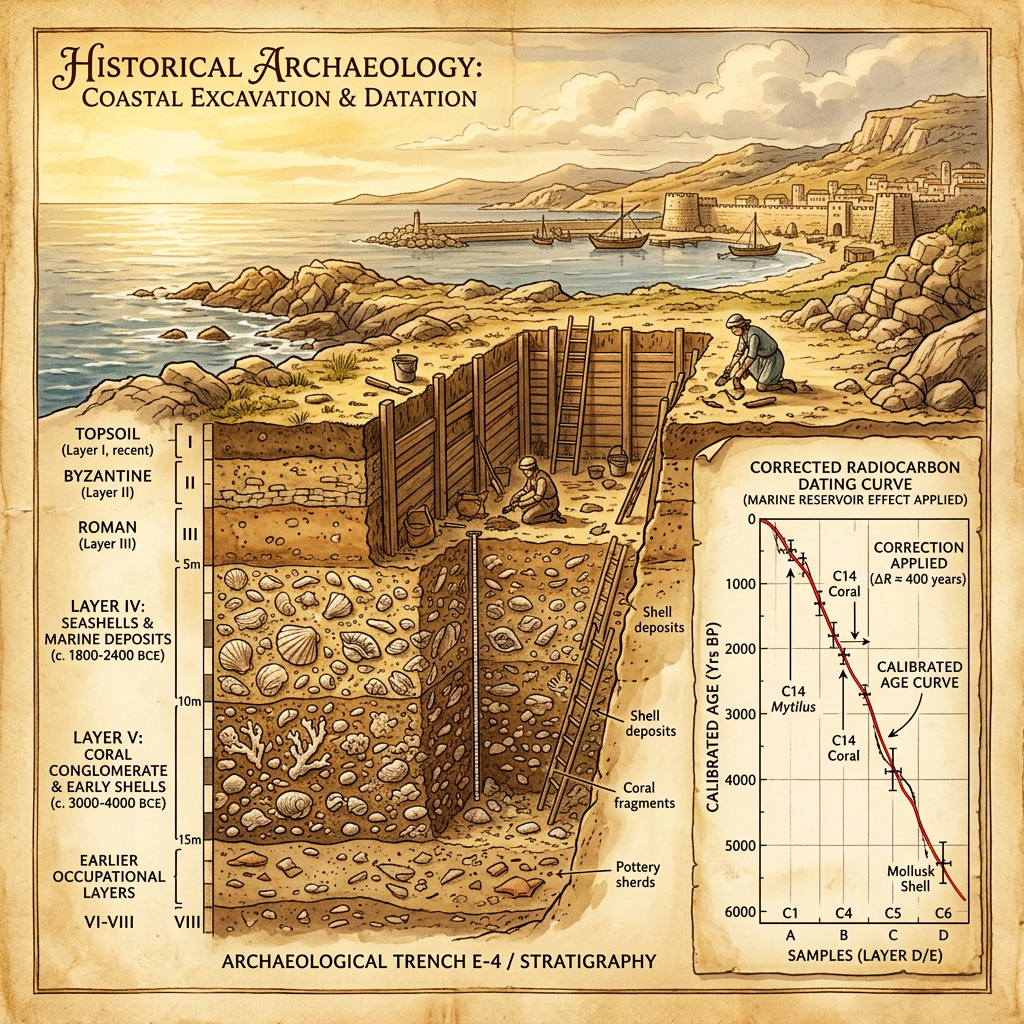
A technical breakthrough in Quaternary Science Reviews has resolved a long-standing debate regarding the 'oceanic reservoir effect' in the dating of coastal archaeological sites. By developing a new Radiocarbon-Uranium-Series cross-calibration model, researchers from the Australian National University have successfully corrected dating errors caused by ancient shifts in marine carbon levels. This method was applied to the earliest known Austronesian shell middens in the Spratly Islands, refining their age to 3800 BCE.
This refined chronology confirms that early maritime expansion into the deep South China Sea occurred much earlier and more rapidly than previous Carbon-14 models suggested. The study proves that these ancient voyagers possessed advanced navigation and deep-water fishing technologies nearly 5,000 years ago. The new methodology is expected to be applied to other submerged and coastal sites worldwide to correct historical timelines of human migration.