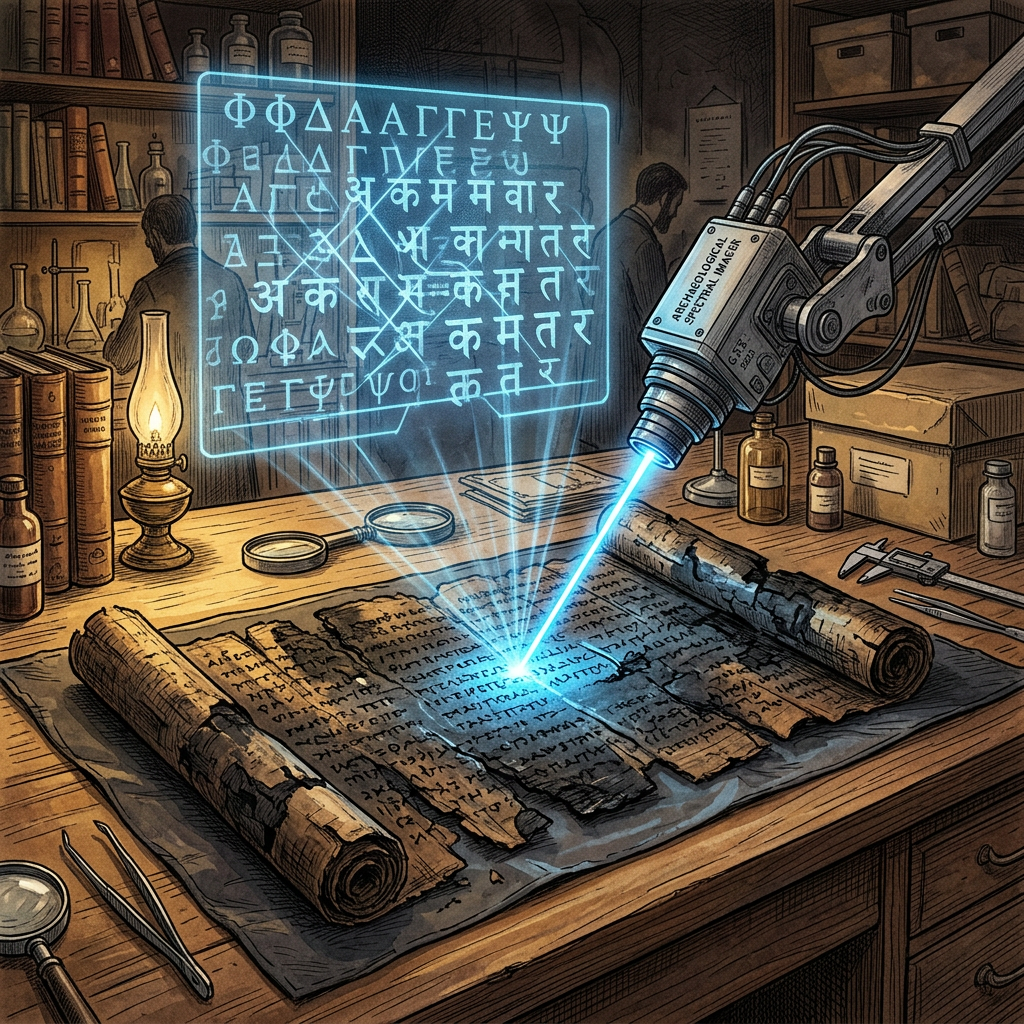
Using advanced multi-spectral imaging and specialized AI algorithms, researchers have successfully deciphered a previously illegible section of a papyrus scroll from the Villa of the Papyri in Herculaneum. The text, attributed to a late Epicurean philosopher, appears to document a series of logical syllogisms that bear a striking resemblance to the Nyaya school of ancient Indian logic. This discovery suggests a much deeper intellectual exchange between the Hellenistic world and Indian thinkers than previously recorded.
The newly revealed passages discuss the "nature of inference" and the "reliability of testimony," using a five-step logical structure that mirrors the Nyaya-Sutras. Scholars at the University of Naples suggest that these fragments might be notes from a lost dialogue between a traveling Greek skeptic and a 'Gymnosophist' or Vedic scholar, possibly occurring in the wake of Alexander the Great's eastern campaigns. This find is being hailed as a landmark in the study of comparative ancient philosophy.