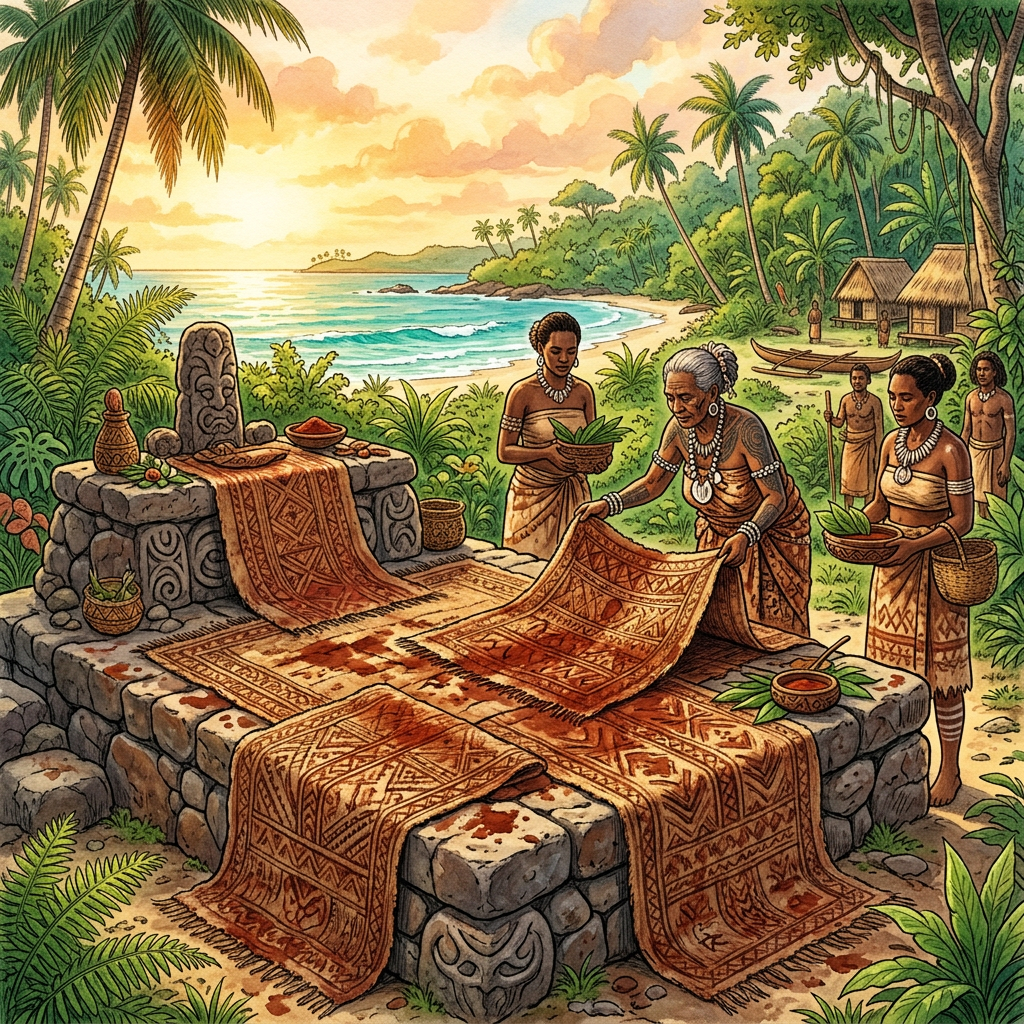
Archaeologists working at the Teouma site on Efate Island, Vanuatu, have uncovered a cache of 3,500-year-old ochre-stained burial shrouds. These textiles, made from woven pandanus fibers and treated with hematite-rich pigments, provide the first physical evidence of elaborate Lapita ancestor-greeting festivals. The discovery suggests that early Austronesian settlers held recurring communal gatherings to re-wrap and honor the remains of high-ranking ancestors.
Analysis of the soil surrounding the shrouds revealed high concentrations of nut residues and shell ornaments, indicating that these rituals were accompanied by massive communal feasting. This finding pushes back the documented history of complex funerary festivals in the South Pacific by nearly five centuries, linking modern traditions directly to their seafaring predecessors.