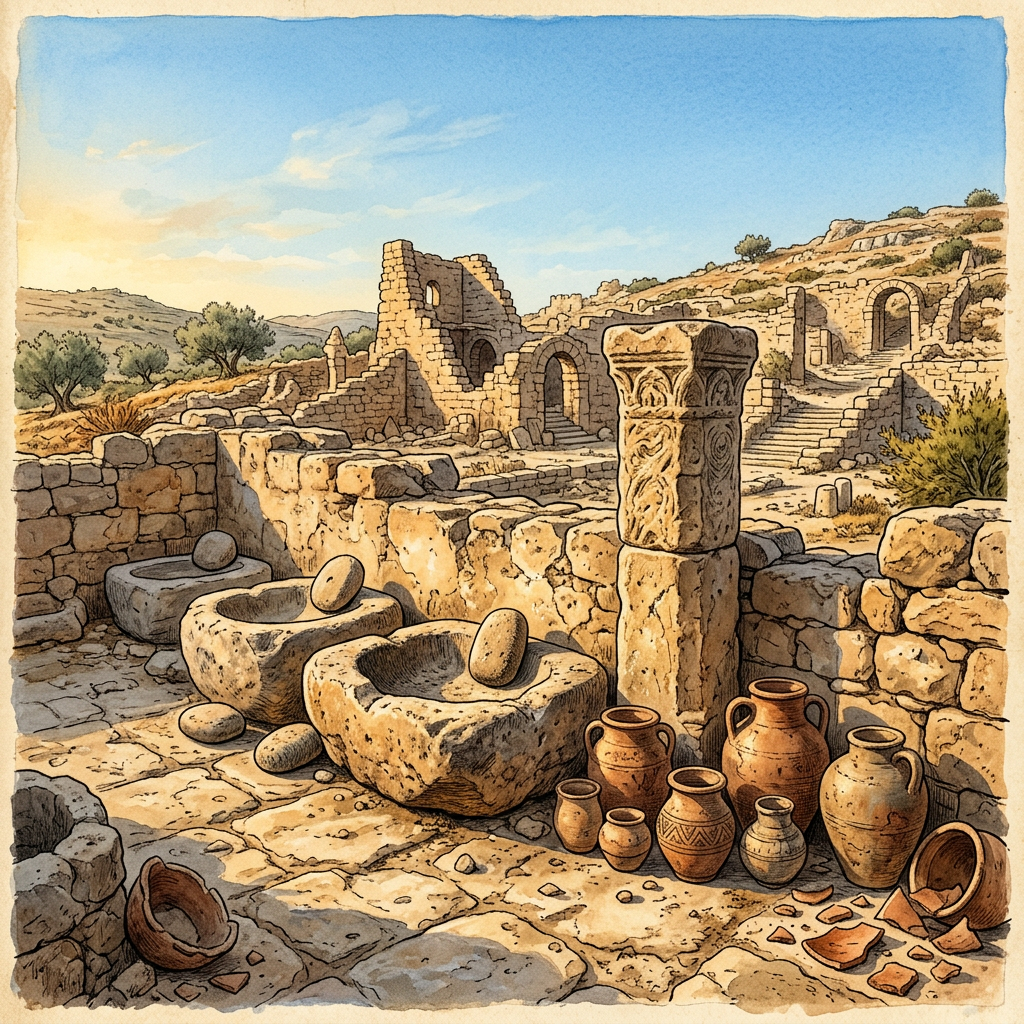
In the outskirts of modern Tunis, archaeologists have uncovered an industrial-scale complex designed for the extraction of floral essences. Large stone pressing vats contain traces of rose, lily, and jasmine pollen, along with residues of olive oil used as a base. The scale of the facility exceeds what would be needed for local trade, pointing toward its use for massive religious celebrations.
Historians suggest these oils were central to the Adonia festival, where fragrant gardens were grown and then discarded as part of a ritual mourning for Adonis. The discovery confirms that the ancient Carthaginians held sprawling 'Aromatic Festivals' to mark the rebirth of vegetation, using scent as a sensory bridge to the divine.