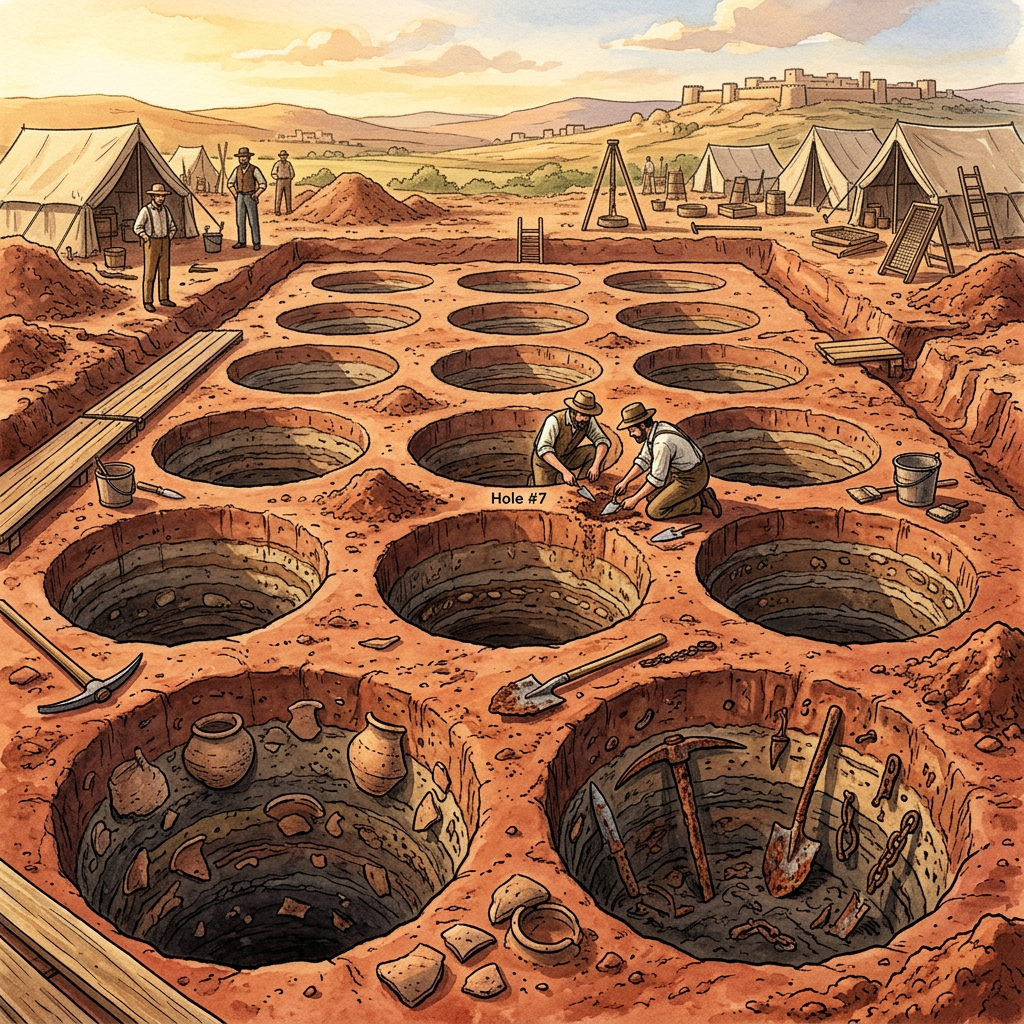
During a survey of the Mutare region, researchers have identified the foundational post-holes for massive ritual poles that once stood over 20 feet high. These structures are associated with 11th-century Shona settlements and were positioned to align with the setting sun during the harvest moon. Excavations at the base of these holes revealed offerings of finger millet and locally forged iron tools.
The poles are believed to be the earliest evidence of the Kutirira, a tradition where communities raised 'ladders to the sky' to invite the spirits of ancestors to join in post-harvest feasting. This discovery highlights the long-standing continuity of cultural heritage and the spiritual importance of agriculture in Southern African history.