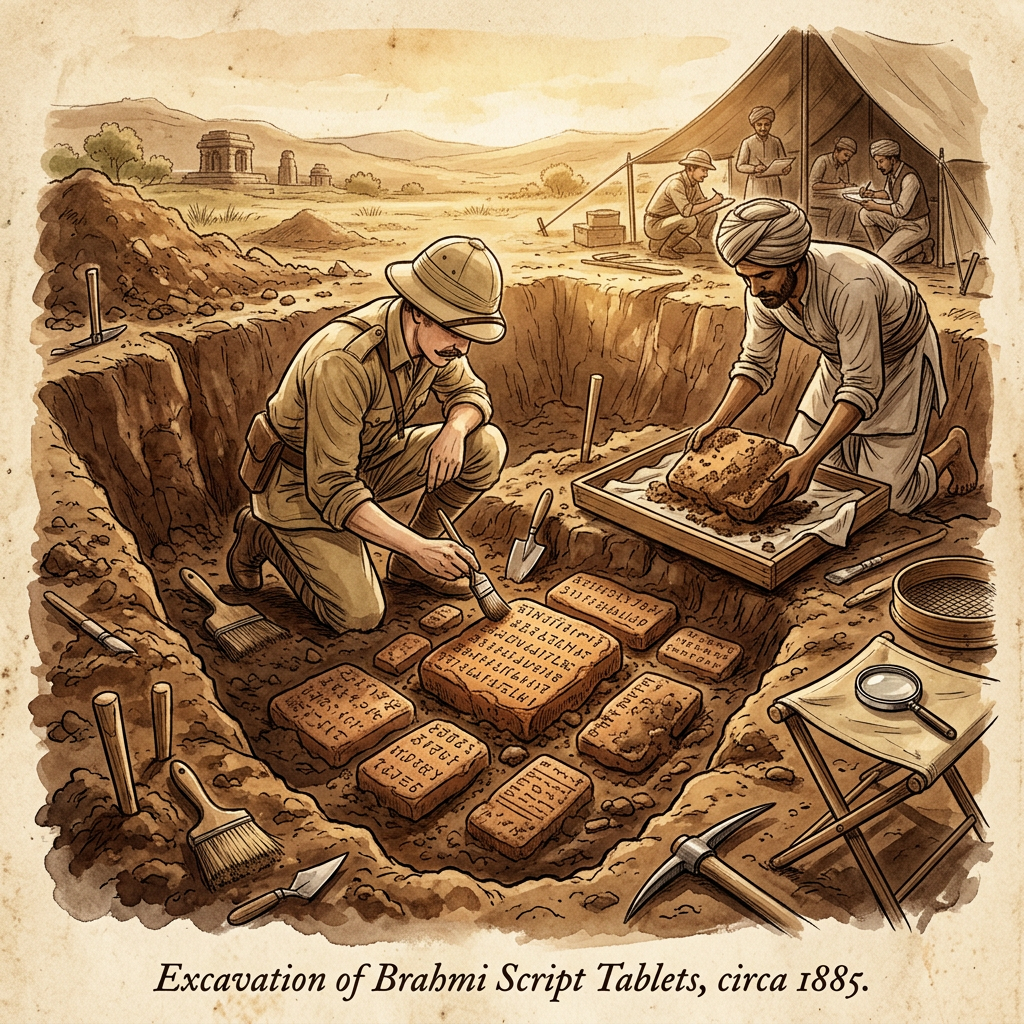
Excavations near the historic plains of Kurukshetra have unearthed a series of clay tablets dating to the 4th century BCE. These tablets contain an early discourse on 'Samskara-Vada', the logic of latent impressions and psychological memory. The text posits that every action leaves a 'subtle residue' in the mind, which dictates future behavioral patterns and ethical choices. This finding provides a missing link in the development of Indian psychological theories between the early Upanishads and the later Sutra literature.
The tablets use a series of analogies involving seeds and soil to explain how these impressions remain dormant until the right conditions trigger their manifestation. Scholars are particularly intrigued by the text’s discussion of 'collective impressions,' suggesting an early philosophical understanding of inherited cultural traits. This discovery significantly pushes back the timeline for the systematization of Indian theories of the subconscious mind.