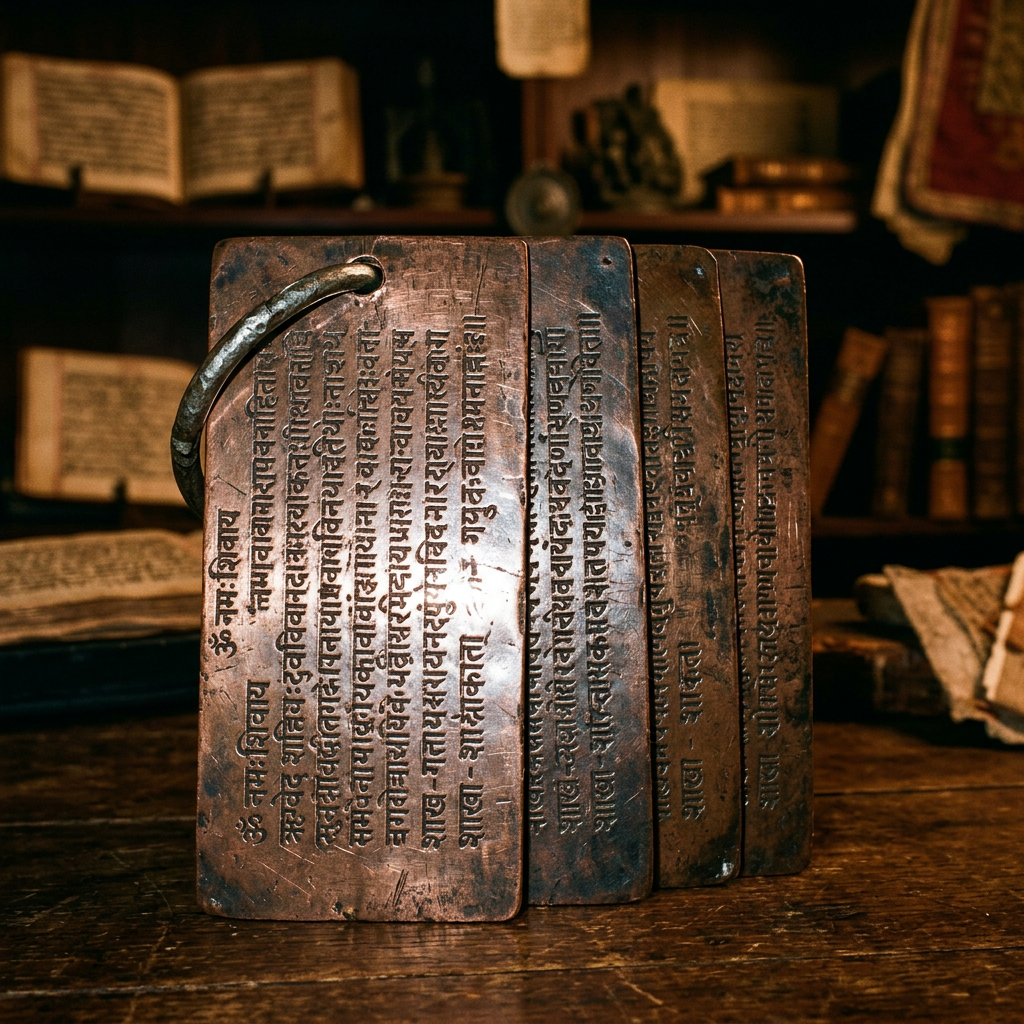
Archaeologists in the Vidarbha region of Maharashtra have discovered a set of 6th-century copper plates that outline a philosophy called 'Bhava-Advaita', or ontological non-dualism. The inscriptions argue that the distinction between the 'knower' and the 'known' is an operational necessity rather than an ultimate reality. This text is significant because it explores the idea of non-duality through the lens of *Bhava* (existence/being), rather than purely through consciousness, as seen in later Advaita traditions.
The plates describe the world of appearances as a 'dynamic modulation' of a single underlying substance that is both material and spiritual. This 'Bhava-Advaita' perspective suggests that the physical world is not an illusion to be discarded, but a legitimate expression of the absolute. Epigraphists suggest that these plates belong to a regional school of thought that influenced the development of late-Gupta era metaphysics and early medieval South Indian philosophy.