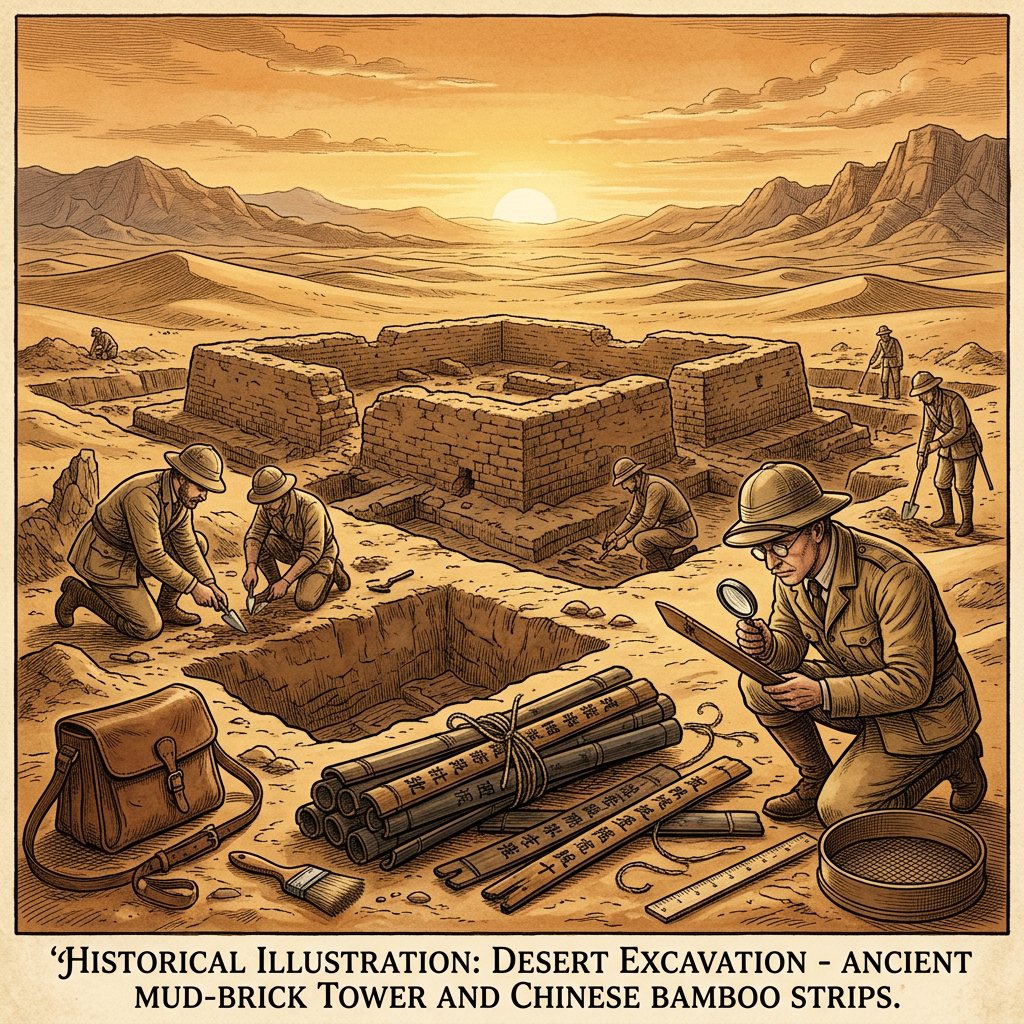
Archaeologists in China's Gansu province have discovered the remains of a Han Dynasty desert courier station that served as a critical logistics hub along the early Silk Road. Buried beneath the shifting sands, the site contained an archive of carbonized bamboo slips that detail tax records for luxury goods such as silk, wine, and exotic furs. These slips provide a day-by-day account of the merchants and diplomatic envoys who traveled through the corridor during the 1st century BCE.
The excavation revealed a series of fortified watchtowers and underground storage pits designed to protect perishable goods from the extreme desert heat. The presence of official Han government seals and ivory identification tokens confirms that this was a high-security state facility. This discovery offers an unprecedented look at the administrative rigor of the Han Empire's border controls and the sophisticated economic systems that supported early transcontinental trade.