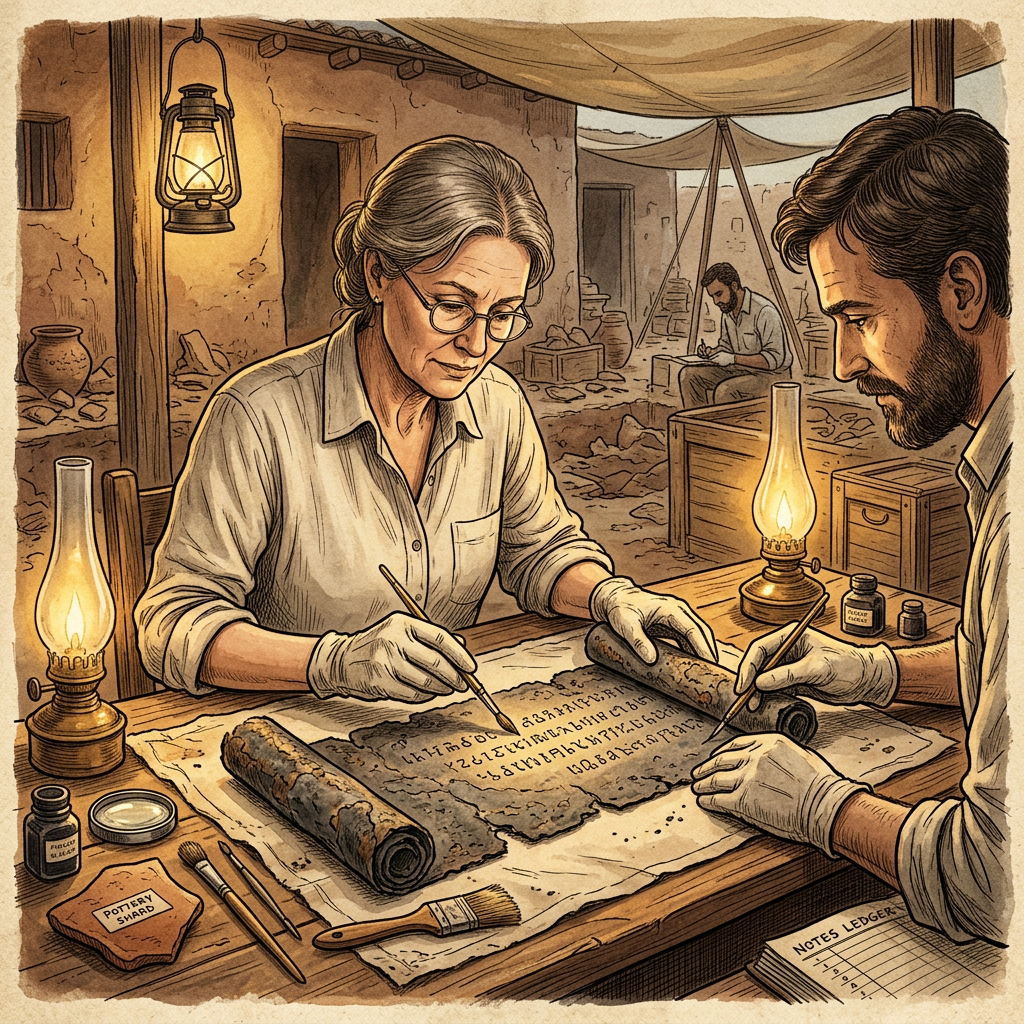
Excavations near the Heliodorus pillar in Vidisha have yielded a remarkable 2nd-century BCE lead-alloy scroll containing a treatise on Svabhava-Vada, or the 'Doctrine of Essential Nature'. This philosophical school, often associated with early naturalism and proto-scientific thought in India, posits that the universe functions according to its own inherent laws rather than divine intervention or external karma.
The newly deciphered text, written in Brahmi script, offers a sophisticated critique of the ritualistic determinism prevalent during the era. It emphasizes the observation of 'Prakriti' (Nature) as the ultimate source of knowledge, marking a significant milestone in our understanding of the diversity of philosophical thought in ancient Central India. Researchers believe this finding bridges the gap between early Vedic cosmology and later materialist logic.