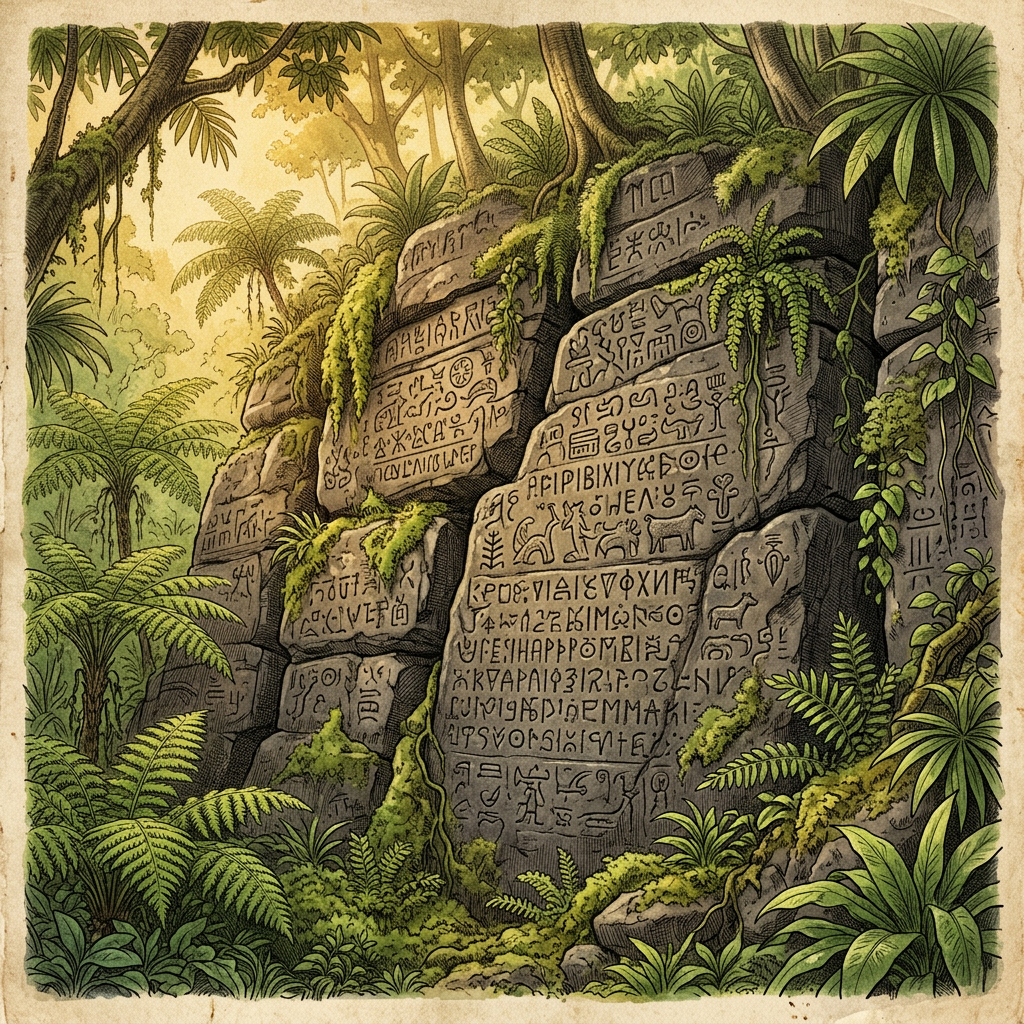
In the dense forests of the Western Ghats, archaeologists have uncovered a series of basalt rock inscriptions dating to the 5th century CE. These inscriptions, written in a late form of Kushana Brahmi, detail a local legal and philosophical code known as 'Vana-Dharma'. The text outlines the 'Moral Status of the Non-Human', arguing that forests, rivers, and mountains possess inherent rights that must be respected by the state.
The philosophy expressed in these inscriptions suggests that human property rights are secondary to the 'primordial lease' granted by nature. It includes specific penalties for the over-extraction of resources, based on the belief that such actions disrupt the 'Sukha-Sutra' or the 'Thread of Happiness' connecting all sentient beings. This discovery highlights a sophisticated early tradition of environmental ethics in the Indian subcontinent.