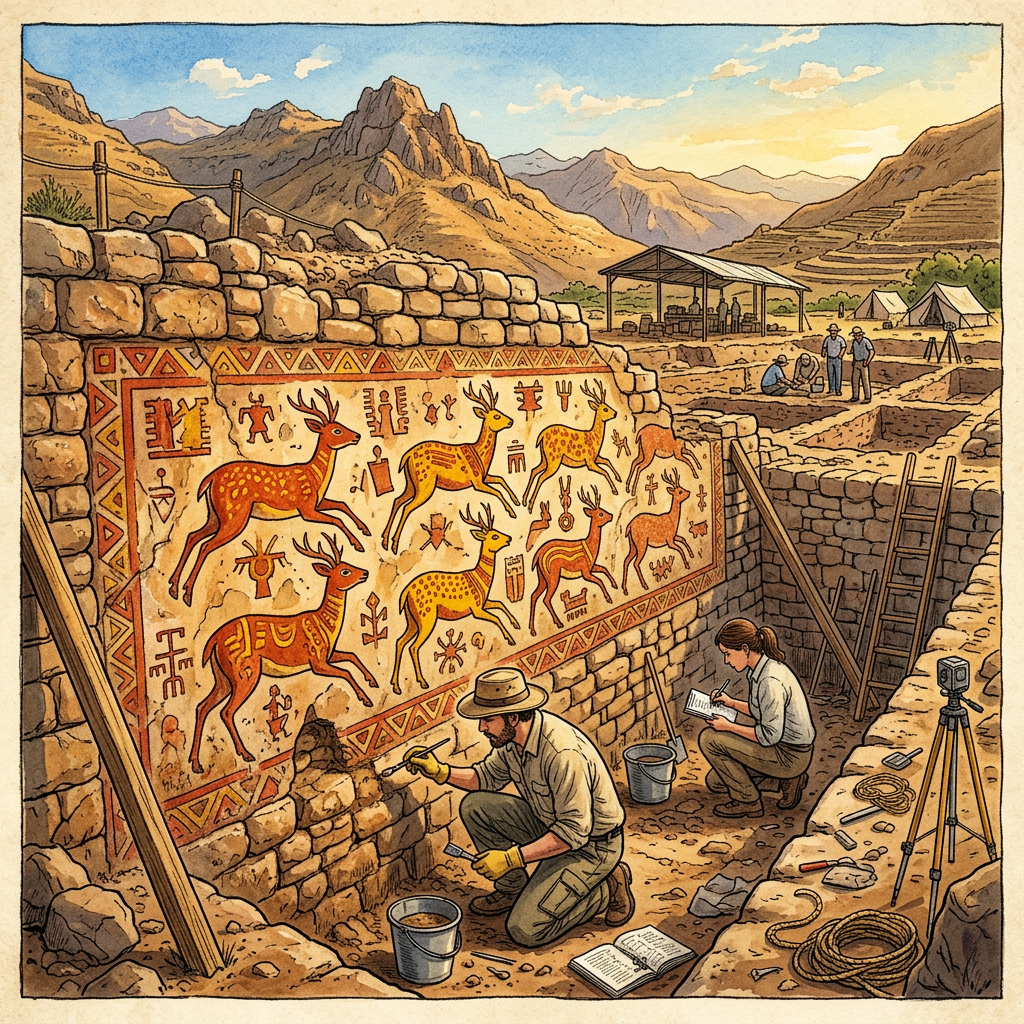
A joint team of international researchers has announced the discovery of the 'Temple of the Sacred Deer' in the Casma Valley of northern Peru. Dating back approximately 4,000 years, the U-shaped temple complex features exceptionally well-preserved polychrome murals depicting stylized deer associated with rainfall rituals and agricultural fertility, marking one of the earliest known examples of complex religious iconography in the Andes.
The site, which predates the Chavin culture, includes a sunken circular plaza and a central staircase leading to a high altar. Scientists believe the temple served as a regional pilgrimage center where early agrarian communities gathered to perform offerings to celestial deities. The vibrant pigments—red, yellow, and blue—remain remarkably vivid despite millennia of burial under desert sands, offering new insights into the spiritual life of Pre-Ceramic Peruvian civilizations.