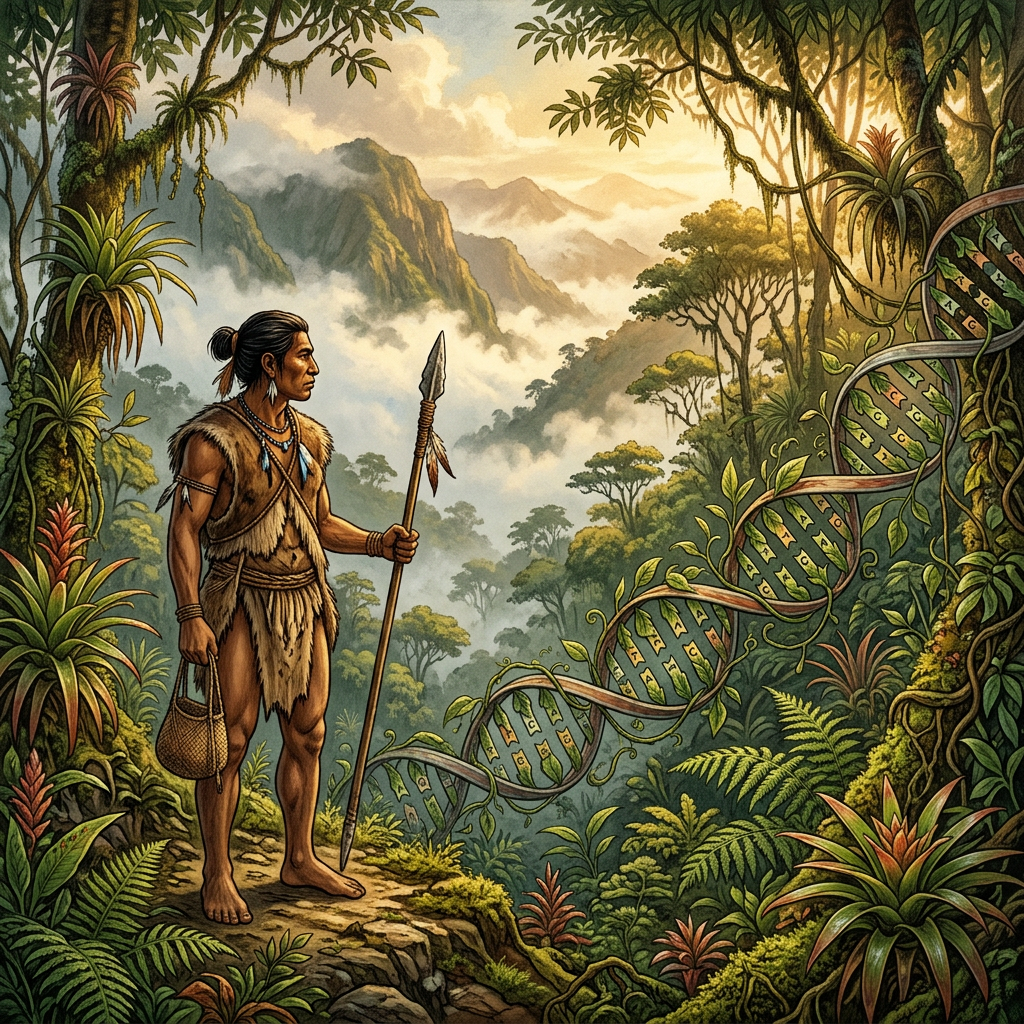
A groundbreaking paleogenomic study published in Science Advances has revealed the first evidence of specific genetic selection for resistance to tropical forest pathogens in early Holocene hunter-gatherers. Analyzing remains found in the Santa Marta rock shelters of Colombia, researchers identified a unique series of mutations in the HLA (Human Leukocyte Antigen) complex that likely provided resilience against endemic arboviruses and parasitic infections prevalent in high-humidity neotropic environments.
The study suggests that as early humans moved from the open plains into the dense Andean jungles, they underwent a rapid evolutionary response to the new biological pressures. This discovery challenges the previous 'Coastal Migration' models by demonstrating that inland tropical populations were already highly specialized and genetically distinct by 14,000 years ago, possessing a 'ghost lineage' that has contributed significantly to modern indigenous Amazonian populations.