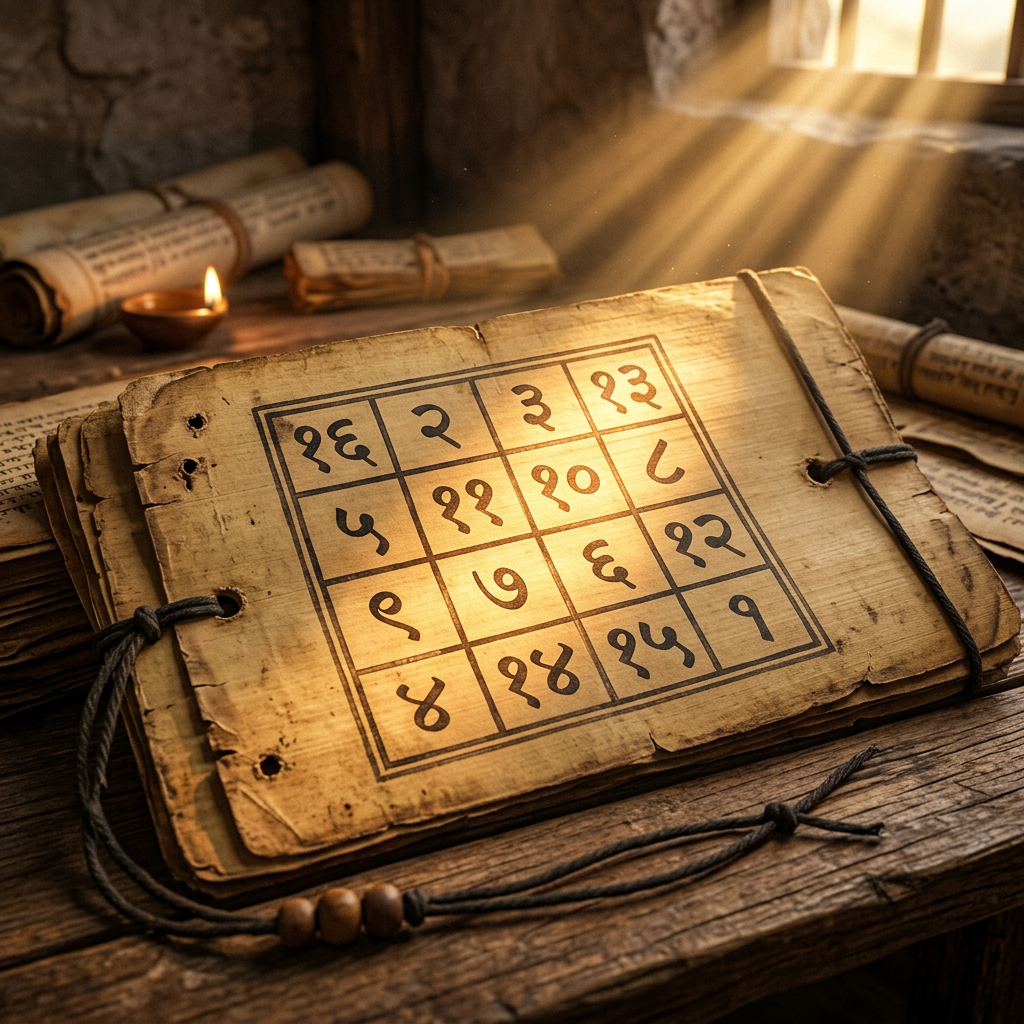
Researchers at the Indian Institute of Mathematical Heritage have deciphered a rare 10th-century Sanskrit manuscript, the Ganita-Chudamani, revealing advanced recursive algorithms for the construction of magic squares of the fourth order. The study, published in the Journal of Indian Mathematics, demonstrates that medieval Indian scholars utilized a sophisticated 'folding' method to ensure that rows, columns, and diagonals all summed to a constant value, predating European rediscoveries of these patterns by several centuries.
The manuscript details how these numerical structures were not merely ritualistic but were used to solve complex linear equations and modeling problems in trade logistics. Professor Vikram Singh noted that the algorithmic steps described are remarkably similar to modern-day matrix transformations used in computer science. This finding provides critical insight into the evolution of combinatorial analysis in the pre-modern world, showing that Indian mathematics had moved far beyond simple arithmetic into abstract structural logic.