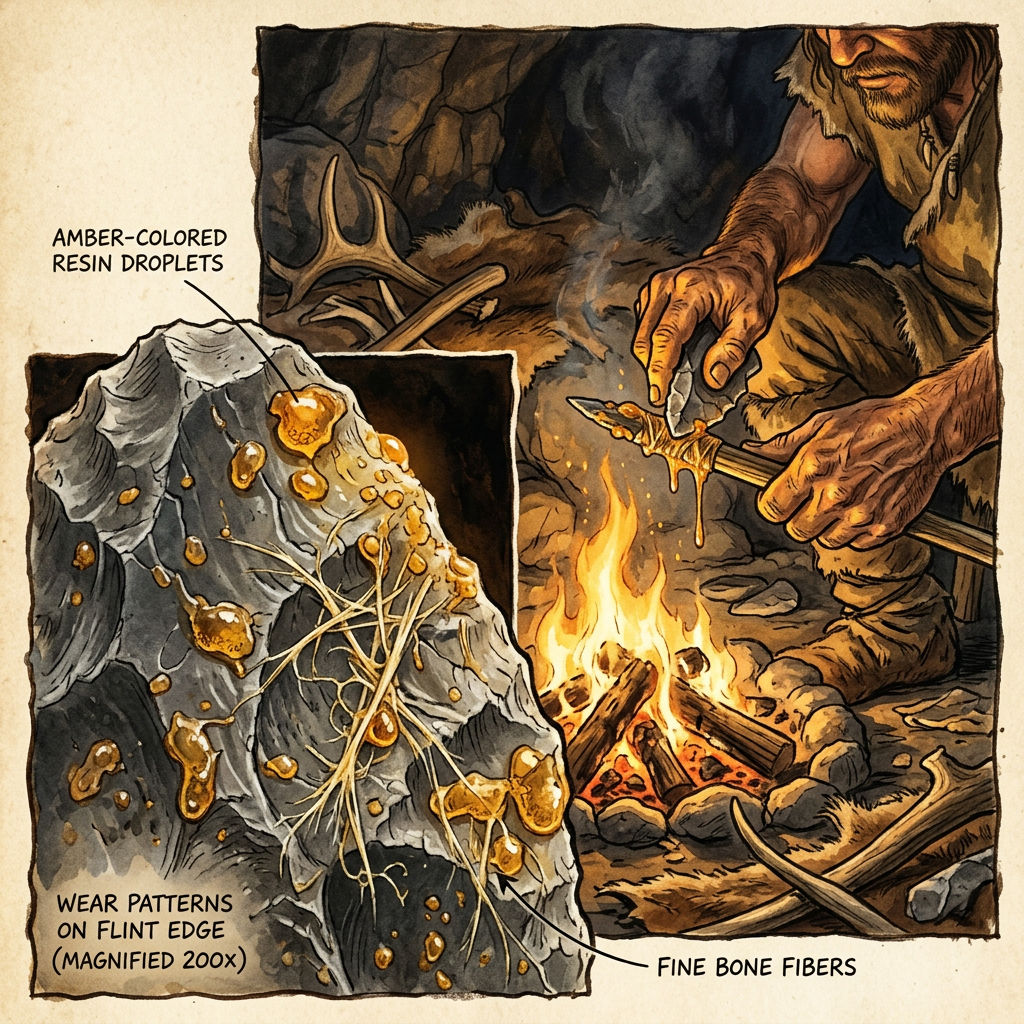
An international team of bio-archaeologists has utilized advanced Proteomic Analysis—the study of ancient proteins—to solve a long-standing mystery regarding the manufacture of Lower Paleolithic tools. By analyzing microscopic residues on 250,000-year-old bone scrapers from the Somme Valley in France, they identified collagen and plant-resin proteins, confirming that early hominins were using complex multi-component adhesive systems to attach bone points to wooden handles.
This study, appearing in Cell: Current Biology, provides the earliest chemical evidence of 'hafting,' a technological leap that significantly increased the mechanical advantage of hunting tools. The use of heat-treated birch bark resin mixed with animal fats indicates that Middle Pleistocene populations in Europe possessed a sophisticated understanding of chemical properties and temperature control long before the emergence of modern Homo sapiens.