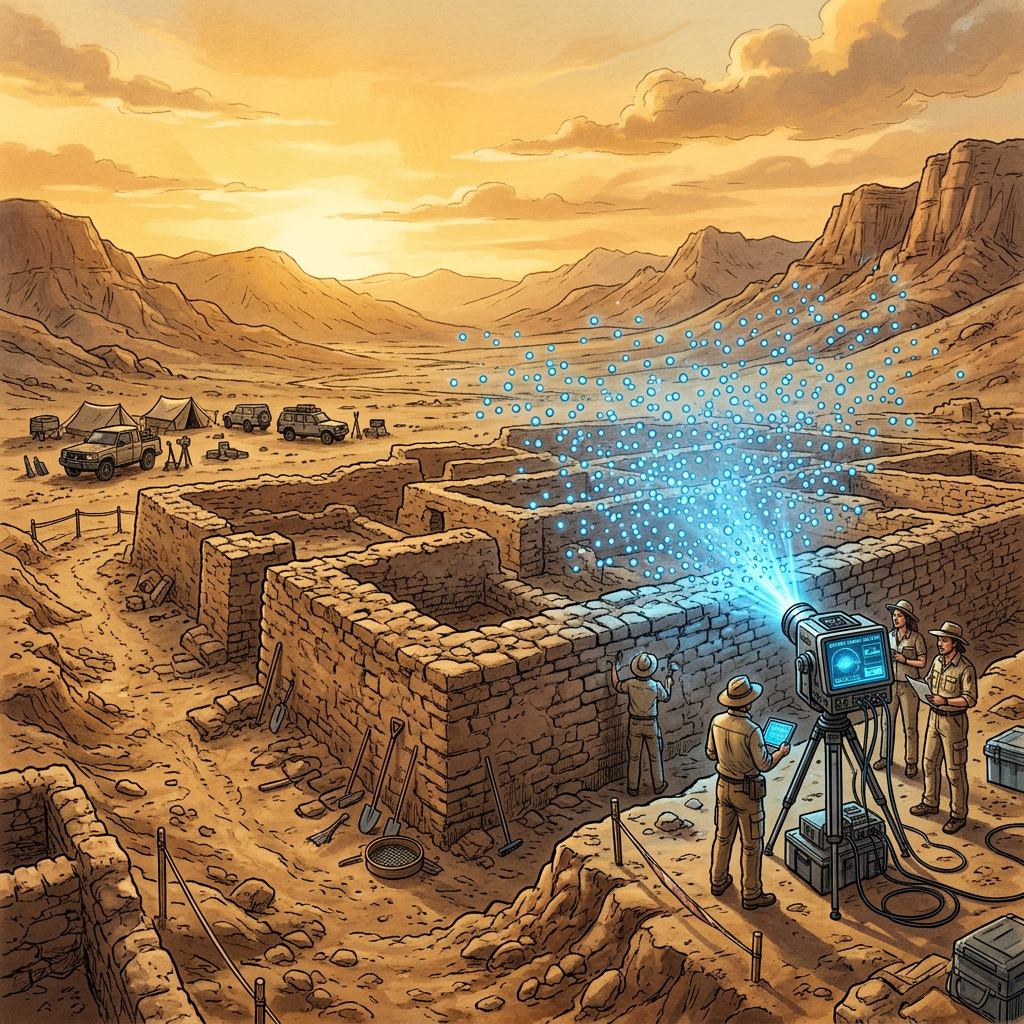
A new dating technique utilizing Neon-22 isotopic diffusion in quartz crystals has successfully refined the chronology of the earliest stone foundations in the Jordan Valley. Researchers at the Levant Archaeological Institute applied this method to the sub-layers of megalithic structures, revealing that urban planning and permanent stone architecture began nearly 400 years earlier than previously estimated via standard Radiocarbon dating.
The 'Neon-22' method is particularly effective for stones that were buried shortly after being quarried, as it measures the exposure time to cosmic radiation prior to burial. This breakthrough allowed the team to pinpoint the construction of major communal walls to exactly 8,700 BCE, coinciding with a sudden shift in local seed morphology. This suggests that the transition to sedentary, fortified life was a faster, more organized response to climatic shifts than the gradualist theories currently dominate.