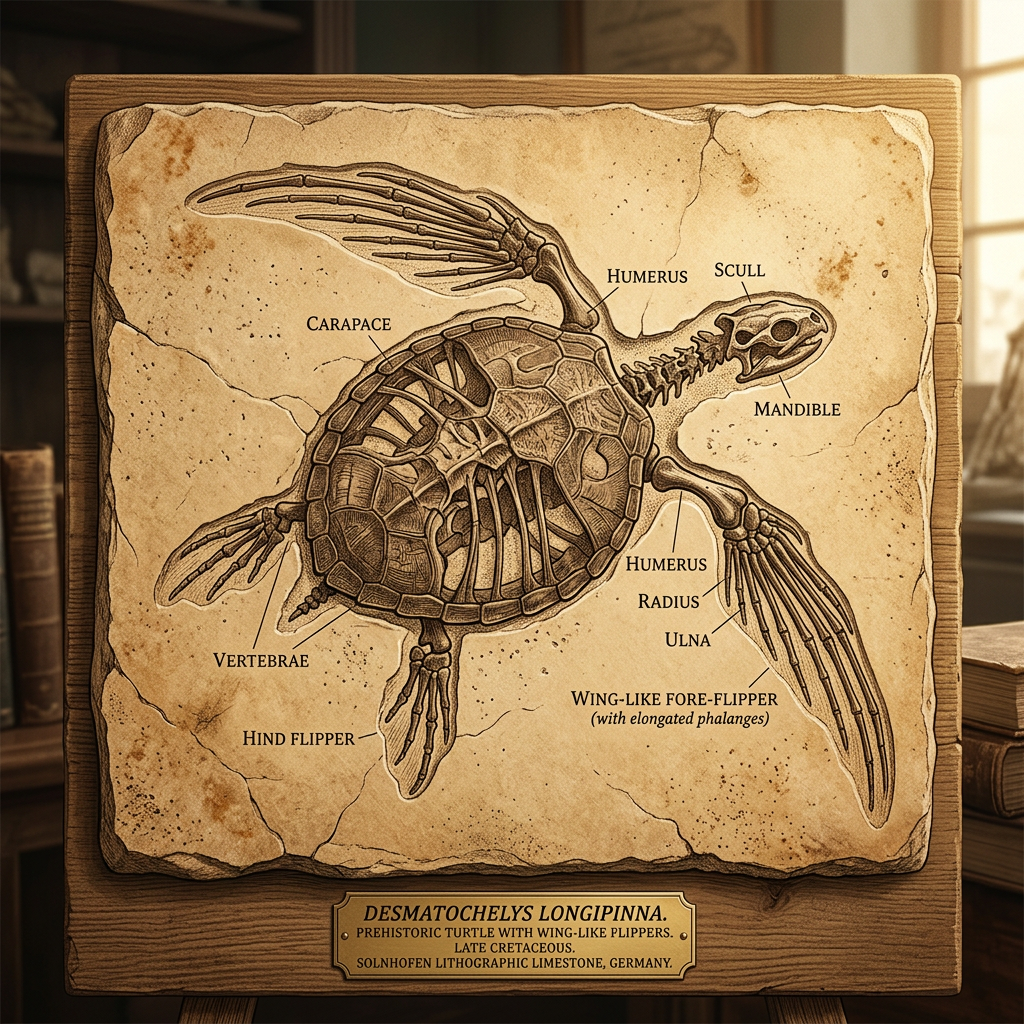
Paleontologists in Australia have unveiled the remains of Pterochelys australis, a unique Cretaceous-era sea turtle. The fossil, found in the Eromanga Basin, features unprecedented anatomical traits, including elongated, wing-like flippers and a highly aerodynamic carapace designed for high-velocity ocean currents.
The researchers hypothesize that this species utilized 'hydro-gliding' techniques to migrate across the vast inland Eromanga Sea. This discovery challenges existing models of marine reptile evolution, proving that ancient turtles developed specialized hydrodynamic adaptations much more varied than those seen in modern species today.