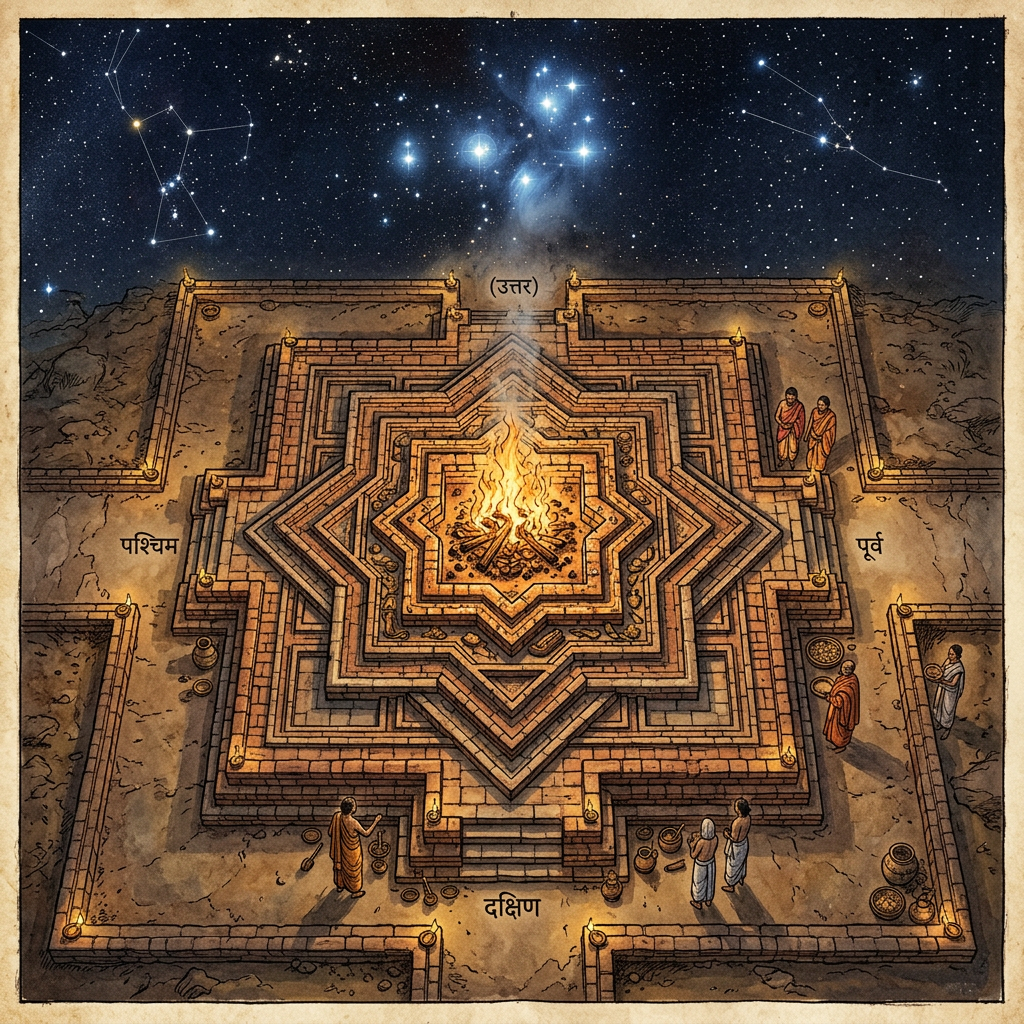
New computational models published in the Journal for the History of Astronomy have established a direct link between Yajurvedic ritual altar dimensions and a specific astronomical event observed in 750 BCE. The study demonstrates that the precise orientation and proportions of these altars were designed to track a rare stellar occultation involving the Moon and the Pleiades star cluster.
This research validates the observational accuracy of ancient Vedic astronomers, showing that ritual architecture served as a functional astronomical record. The findings suggest that the 8th-century BCE scholars possessed sophisticated techniques for calculating lunar parallax and planetary positioning centuries before similar records appeared in other civilizations.