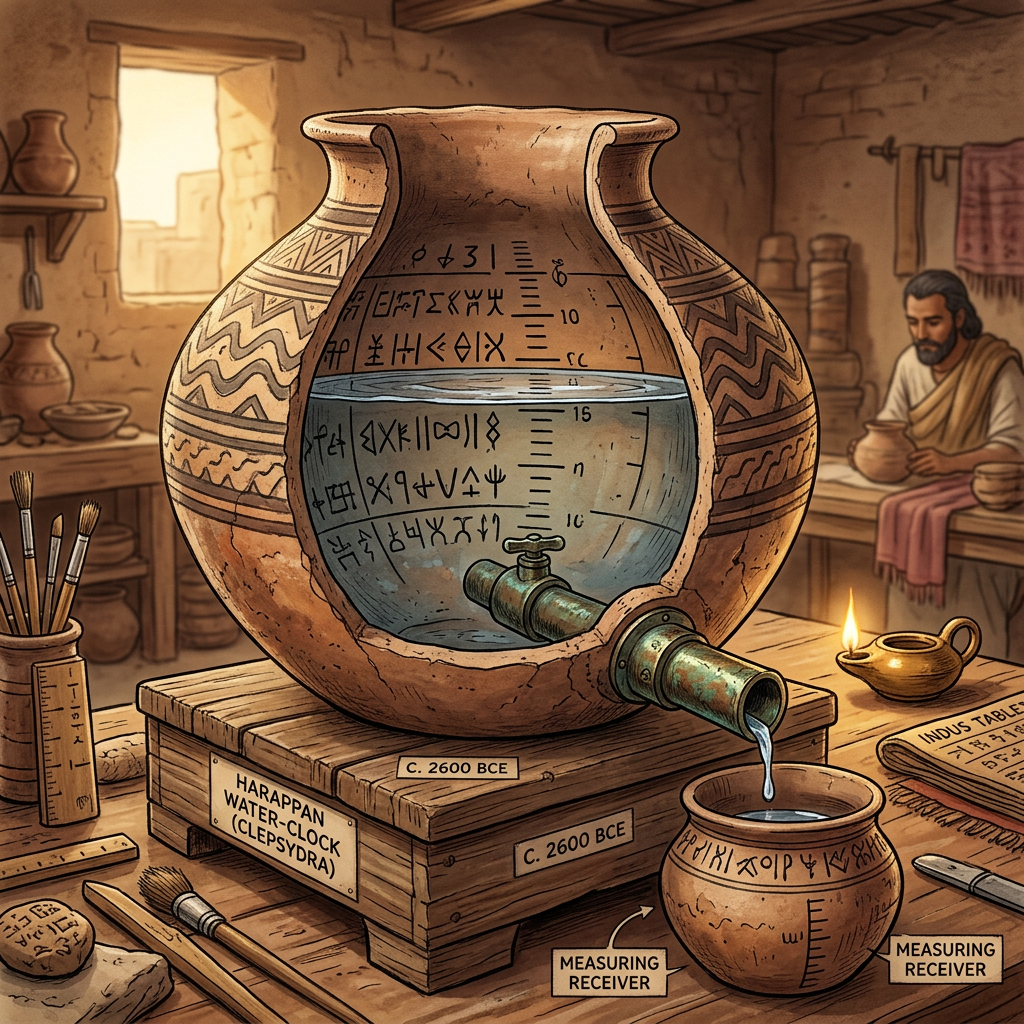
High-resolution spectroscopic analysis of ceramic and metallic components found at a Mature Harappan site in Haryana has identified the remains of a standardized solar-water clock system. Unlike simpler sundials, these devices used regulated water flow to maintain time during the night, synchronized with gnomon shadows during the day to ensure civil consistency across urban centers.
The study, published in Antiquity Research, indicates that the Indus Valley Civilization utilized a decimal-based timekeeping system that was integrated into their trade and ritual logistics. This discovery marks the earliest known use of such sophisticated dual-mode chronometry in human history, predating similar Mesopotamian systems by several centuries.