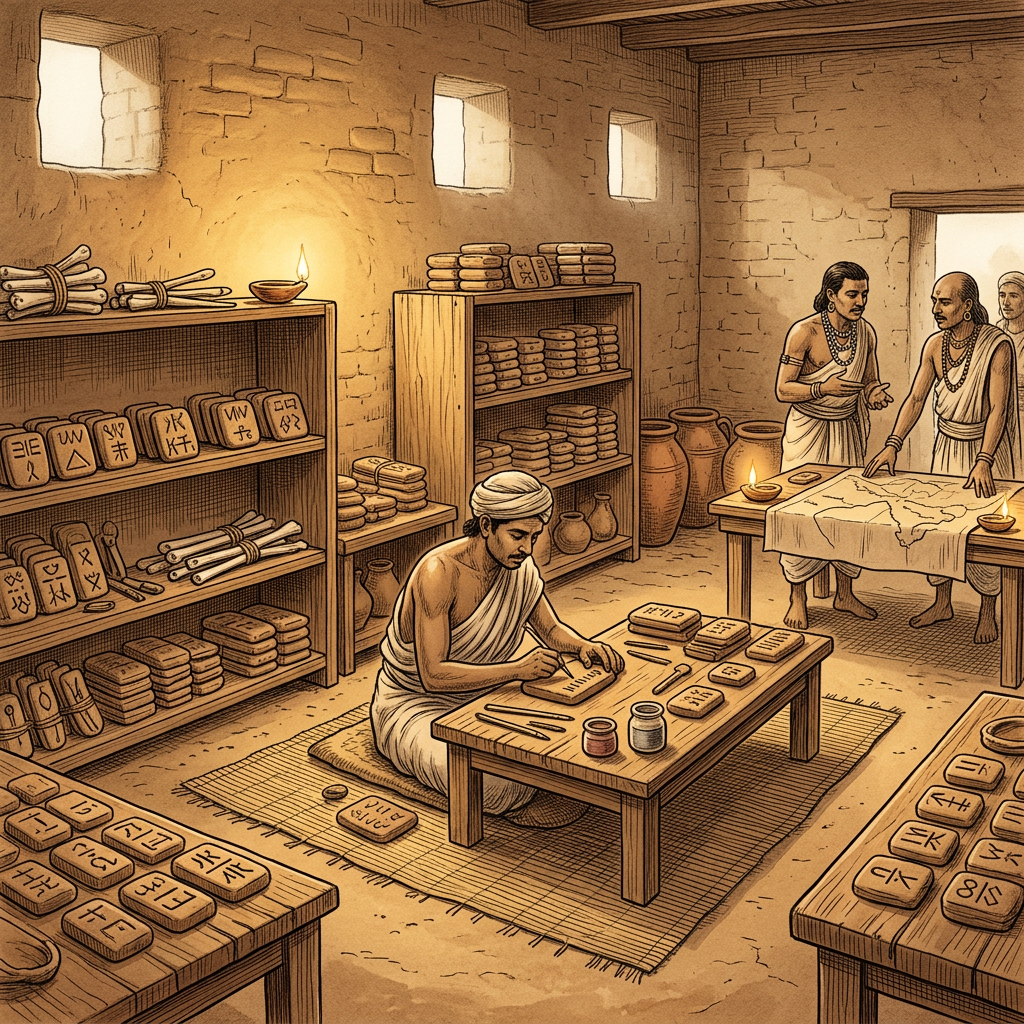
Archaeologists excavating a newly identified site in the Kutch District of Gujarat have unearthed a specialized administrative building belonging to the Mature Harappan period. The structure, identified as the 'Archive of the Master of Royal Herds', contains over 400 intact clay tokens and several hundred sealings featuring unique zoomorphic motifs. These artifacts provide the first direct evidence of a centralized livestock management system within the Indus Valley Civilization.
Preliminary analysis of the tokens suggests they were used as a sophisticated accounting system to track the movement of cattle and water buffalo between urban centers and rural pastures. The find includes rare bone styluses and limestone counting boards, indicating that the Harappans employed a complex decimal-based metrology for resource allocation. This discovery challenges previous notions of decentralized agrarian life and highlights the proto-industrial scale of Harappan pastoralist logistics.