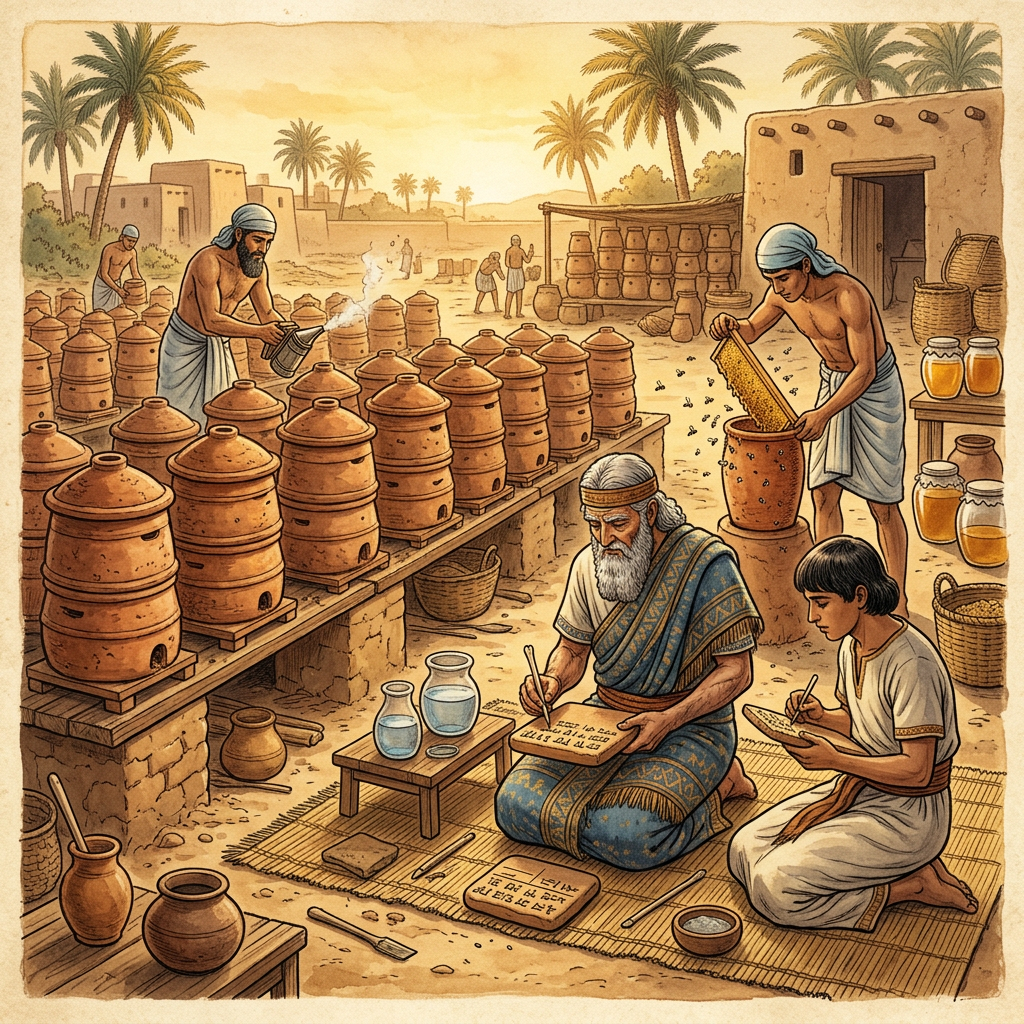
A joint international team of archaeologists has uncovered a unique cuneiform archive in the ruins of Ancient Lagash, southern Iraq. The tablets, dating to the Ur III period, belonged to an official known as the 'Master of the Royal Bees'. This archive constitutes the oldest known written records specifically dedicated to systematic apiculture, detailing the seasonal migration of beehives along the Tigris River and the production of medicinal honey for the royal court.
The excavation revealed several terracotta cylindrical hives and specialized bronze smokers used for harvesting honey without harming the bees. The cuneiform texts include detailed yield reports and taxation records for honey and beeswax, suggesting that beekeeping was a highly regulated state monopoly. Experts believe this discovery will reshape our understanding of Sumerian agricultural diversity and the role of specialized insect products in ancient Mesopotamian pharmacology.