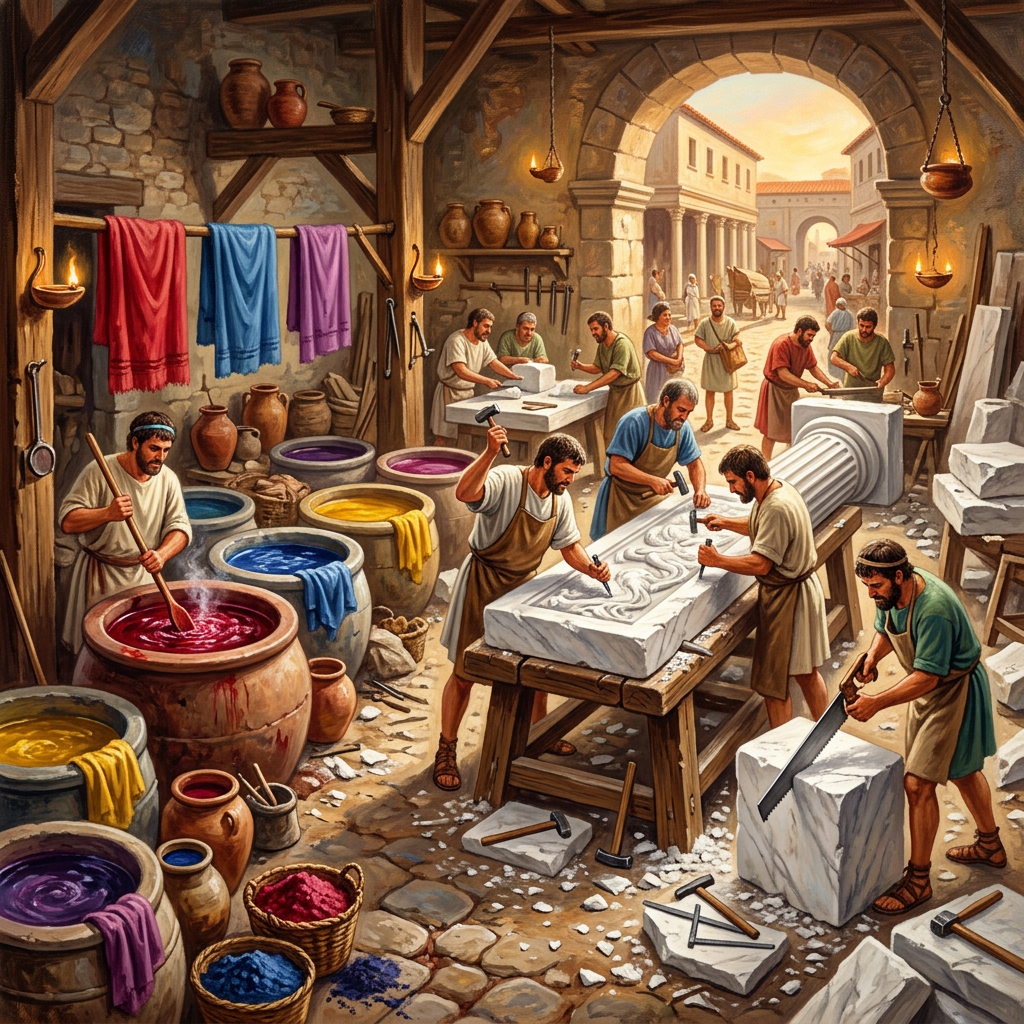
Excavations in the historic marble-quarrying region of Carrara, Italy, have revealed an unprecedented industrial complex: a 2nd-century 'Imperial Marble-Staining Studio'. This facility was used to treat low-grade white marble with mineral-based dyes to mimic rare, expensive varieties such as porphyry or giallo antico. The find includes lead-lined vats containing residues of iron oxides, copper carbonates, and vegetable oils used in the staining process.
Archaeologists also found a collection of stone templates and chemical recipes inscribed on bronze tablets, detailing the exact heating and soaking times required for various colors. This discovery highlights the advanced chemical engineering used by the Romans to meet the aesthetic demands of the Imperial capital. It also suggests that many 'luxury' stones found in Roman villas may have been high-tech industrial imitations created to satisfy the empire's burgeoning middle class.