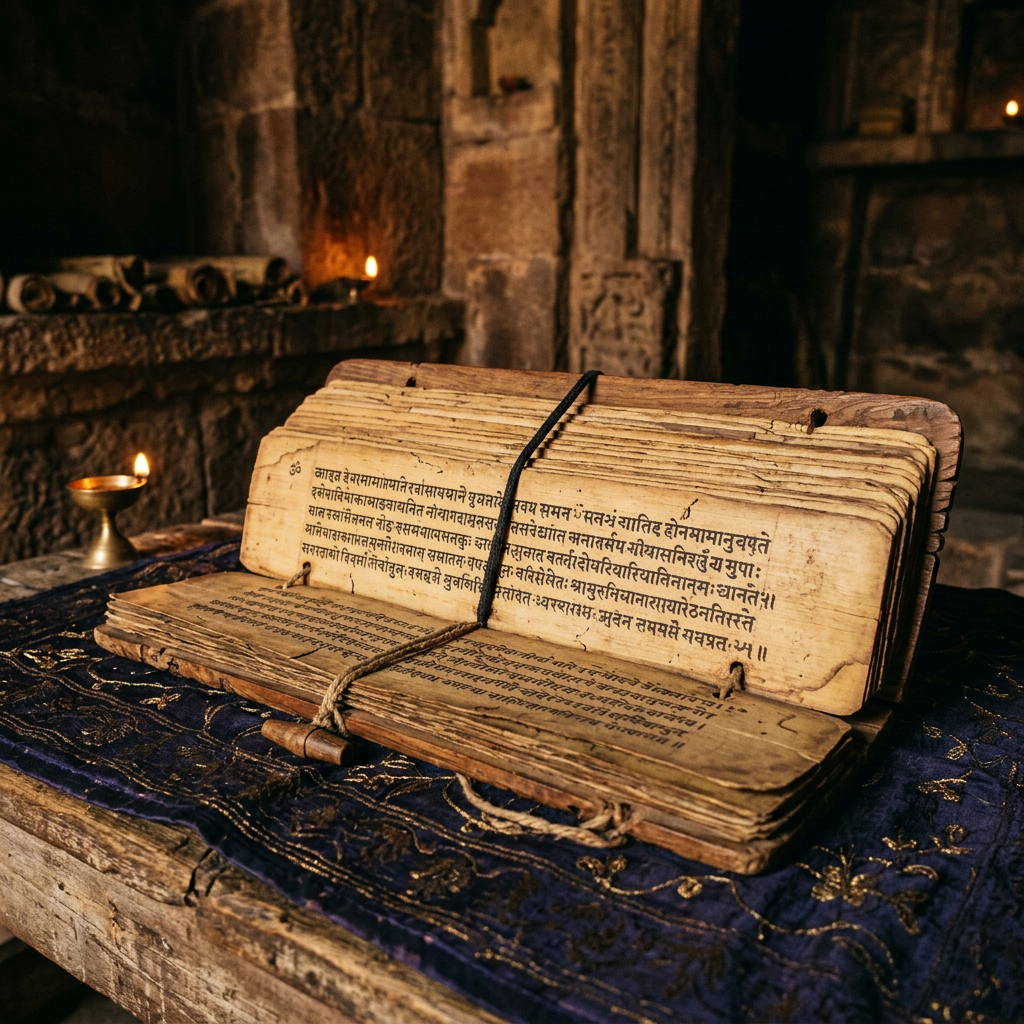
Archaeologists and Sanskrit scholars have announced the discovery of a rare 11th-century manuscript titled 'Samatva-Vritti' within a hidden stone vault in the Vidarbha region of Maharashtra. The text, written in a sophisticated late-Brahmi script, provides a detailed philosophical roadmap for maintaining radical equanimity (samatva) during periods of extreme social and political upheaval. Unlike later works that focus on ascetic withdrawal, this treatise argues for a 'proactive stillness' where the individual engages with the world while remaining internally unswayed by outcome.
Scholars believe this manuscript represents a bridge between early Vedantic thought and the emerging ethical frameworks of the medieval period. The text includes specific dialectical exercises intended to deconstruct personal bias, suggesting that the pursuit of truth is impossible without the mastery of an even mind. This discovery is expected to shift current academic understanding of how ancient Indian philosophers balanced metaphysical inquiry with civic duty.