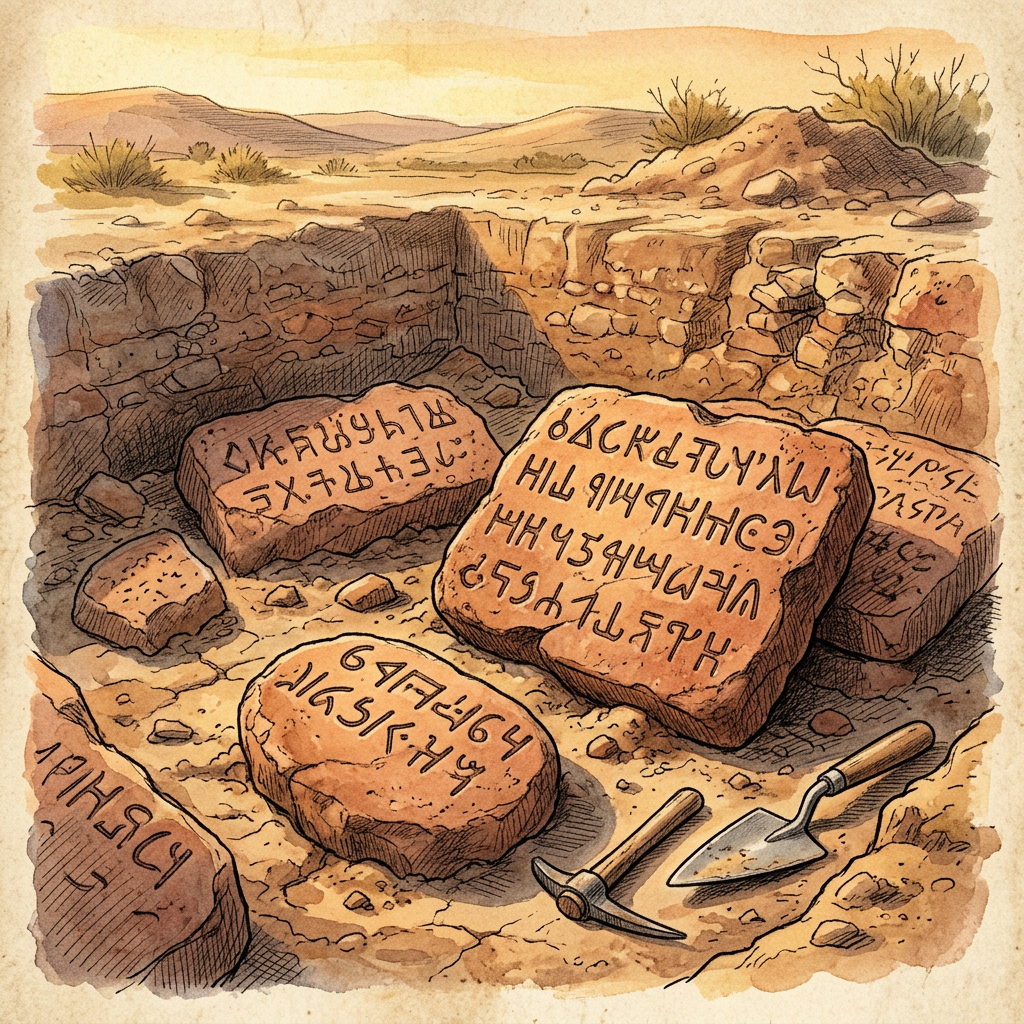
A recent excavation at the pre-Mauryan layers of Rakhigarhi has unearthed a series of terracotta tablets inscribed with the 'Prana-Spandana' (Vibration of Life). These artifacts, dated to the 6th-century BCE, offer the earliest known systematic exploration of the metaphysics of vital breath (prana) as a cosmic rather than merely biological force. The inscriptions describe a 'universal resonance' that links the individual human breath to the rhythmic cycles of the stars and the seasons.
The discovery is groundbreaking because it predates the codified Yoga Sutras by centuries, indicating that a sophisticated 'philosophy of vibration' was already well-established in the Sarasvati-Indus basin. Researchers highlight that the text views human consciousness as a localized frequency within a broader cosmic field, providing a unique proto-scientific perspective on the interconnectedness of all living matter.