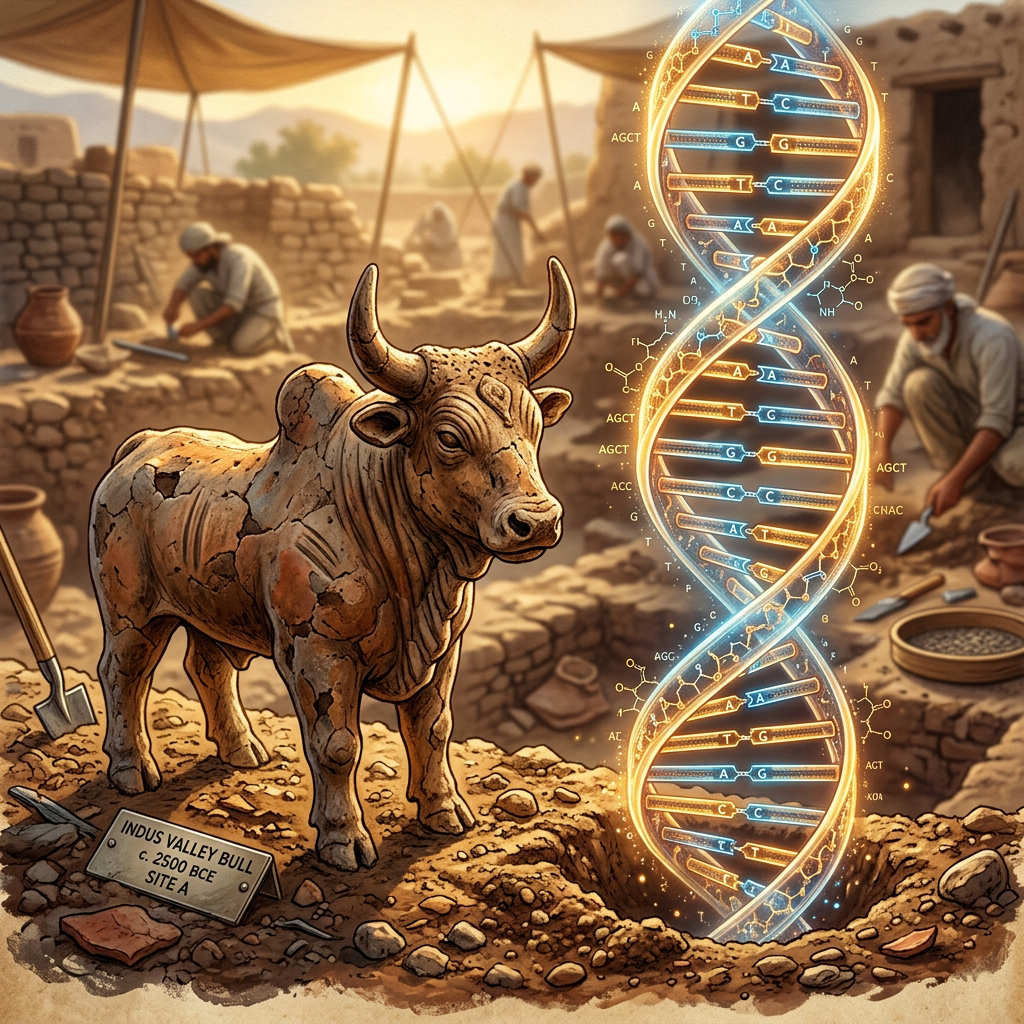
A groundbreaking genomic study published in Nature Archaeology has revealed the presence of specific bovine pathogens in livestock remains at a mature Harappan site in Haryana. By analyzing environmental DNA and bone marrow samples from ancient cattle, researchers identified the earliest known strains of bovine tuberculosis and rinderpest-like viruses, providing new insights into the challenges of early animal husbandry.
The study suggests that the high density of livestock in urban centers like Rakhigarhi and Mohenjo-Daro may have facilitated the spread of zoonotic diseases. However, the findings also indicate that the Indus Valley people developed sophisticated isolation protocols, as evidenced by the strategic placement of veterinary enclosures found on the periphery of the main residential zones.
This genetic map is the first of its kind for the Bronze Age Indus Valley, highlighting a complex interplay between domestic animal health and the expansion of maritime and terrestrial trade routes. The researchers believe these pathogens were likely introduced through trade caravans connecting the Harappan heartland with Central Asian pastoralist communities.